

Ever thought about how updating your aquarium lighting might save you money and still keep your tank looking beautiful? LED lights can turn your tank into a lively underwater scene while using less power and lasting way longer than those old bulbs.
Imagine it like trading in an outdated gadget for a sleek, modern one that brightens your day with efficient style. These high-efficiency LED lights not only cut your energy bill, but they also bring out the colors and details of your tank in a way that feels like watching gentle ripples on a sunlit pond.
In this chat, we'll dive into how switching to LED lighting can make your aquarium both budget-friendly and a true work of art. Isn't it amazing how a simple change can create such a vibrant, watery masterpiece?
Energy Efficient Aquarium Lighting Sparks Savings
Choosing the right lighting for your aquarium can feel like the first gentle ripple in a calm pond, it makes a big difference over time. When you compare the usual options, you can see where you save energy and keep your tank looking vibrant and healthy, like a little piece of underwater art. It all comes down to balancing energy use and longevity.
LED lights are the clear stars of the show. Unlike T8 and T5 fluorescent tubes, which sip energy and have a life of about 20,000 hours, LEDs use much less power and last far longer, keeping your tank bright without emptying your wallet.
| Type | Wattage Range | Lifespan (hours) | Annual Energy Cost (£) |
|---|---|---|---|
| T8 fluorescent | 15–55 W | Up to 20,000 | ~£27 |
| T5 fluorescent | 24–80 W | Up to 20,000 | ~£42.57 |
| LED | ~11 W | ~50,000 | ~£8.67 |
In the long run, LED lighting not only cuts down on your power bill but also trims maintenance costs because they need fewer replacements. With lower wattage and smart energy use, you get a tank that’s like a lively coral reef and a budget that stays calm, just like a serene underwater current.
Evaluating High-Efficiency LED Tank Lighting Performance
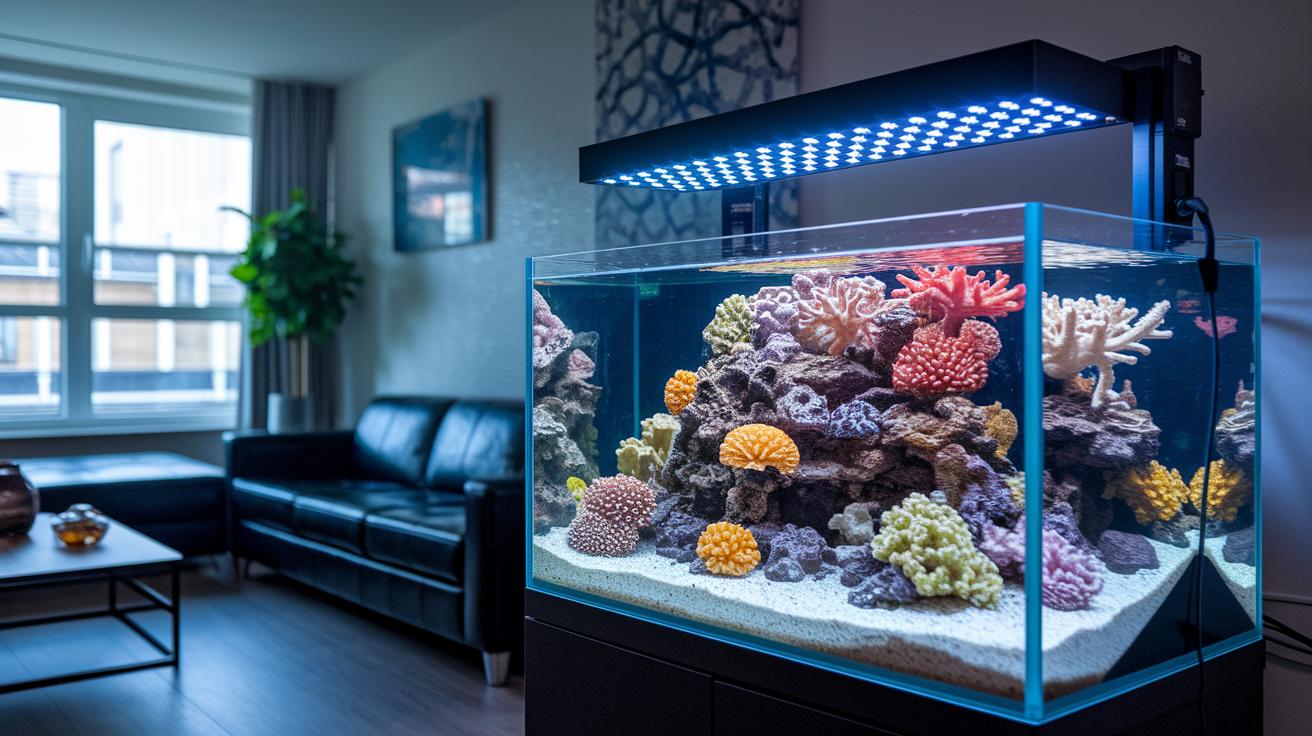
When it comes to keeping your aquarium glowing beautifully without breaking the bank, high-efficiency LED tank lighting is the way to go. These lights are built to last, up to 50,000 hours! That’s much longer than old-style lights like metal halides or compact fluorescents, which means you get a light that stays reliable for years while saving electricity and cutting down on replacements. Imagine switching from a clunky desktop to a sleek laptop, that’s how much of an energy upgrade you get with LEDs.
Plus, you can set the color just right with a range from 6500 K to 10,000 K. This lets you adjust the spectrum so that aquatic plants and corals feel right at home, almost like the natural light you’d see in shallow, sunlit waters. Think of it like tweaking the brightness on your TV to get the perfect picture. It’s a little bit of tech magic that turns your tank into a vibrant underwater world.
Take the Twinstar Light II 30B, for example. This neat little light uses only 11 watts and covers a tank that’s 30 to 40 centimeters wide, giving off 840 lumens of warm, inviting glow. Even though it costs €44.73 and is currently out of stock, it shows how LED technology can combine low power use with great brightness, a win-win for any aquarium enthusiast.
Installation and Retrofit Options for Energy Efficient Aquarium Lighting
Switching out old fluorescent tubes for modern LED lights can give your aquarium a fresh, vibrant twist while lowering your energy bill. Retrofit kits let you keep your current setup and simply add new LED technology. These kits come with mounting brackets and ready-to-use connectors, making the upgrade a breeze and budget-friendly, too.
Here's a simple guide to get you started:
- Measure your tank carefully, jot down the length and width to figure out the best placement for even lighting.
- Secure the mounting brackets onto your existing fixtures to create a strong base for the LEDs.
- Safely disconnect the old wiring and hook up the new LED modules using the plug-and-play connectors; make sure every connection is snug.
- Test the new setup by briefly powering it on to be sure the LED lights work as expected.
For LED strip installations, run the strips in parallel along the top of your tank, leaving about 5-10 cm of space above the water. This spacing helps keep the lights cool and avoids water issues, all while giving your tank a nice, even glow that your aquatic friends will love.
Cost-Benefit Analysis of Energy Saving Aquarium Lighting
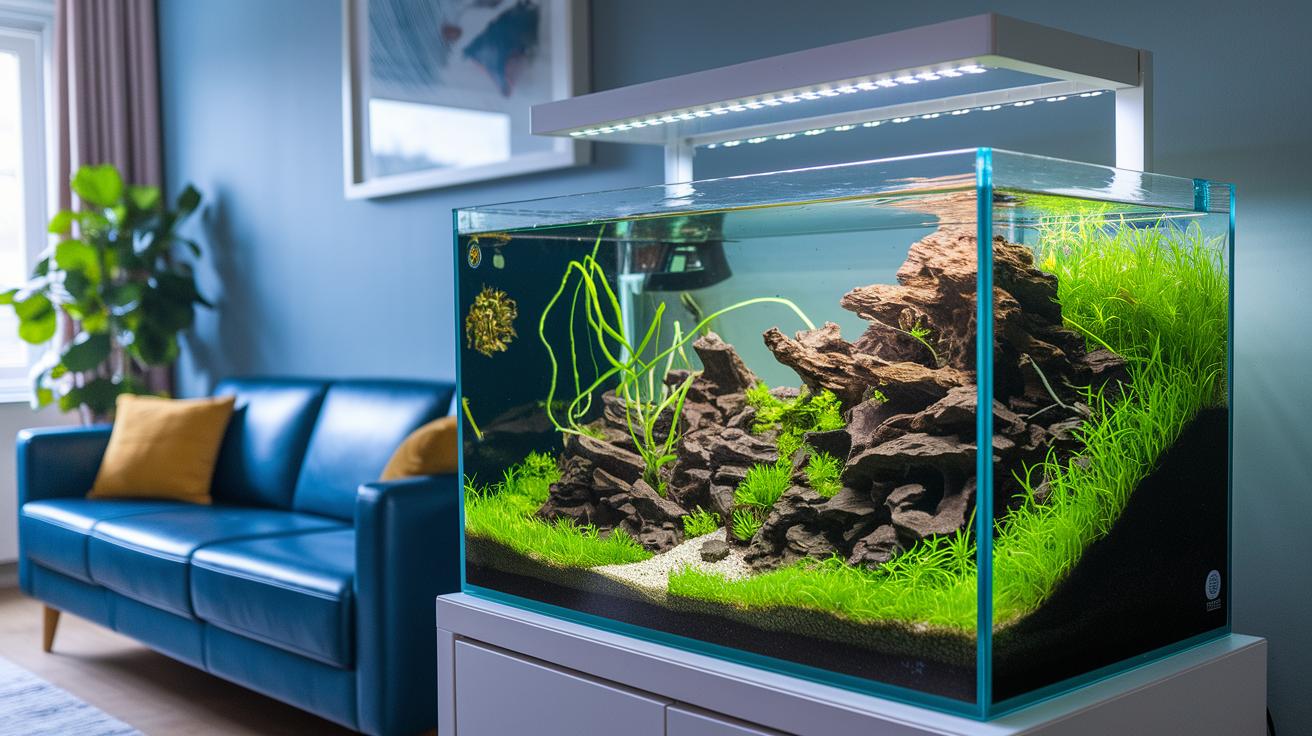
Switching to LED lighting might feel like a bigger spend at first, but it quickly pays off with lower energy bills and less upkeep. Think of it like setting up your aquarium with care, spending a little extra now helps you enjoy a beautiful, low-maintenance tank later. When you compare the gentle glow and cost of an LED to a traditional fluorescent bulb that uses more power, the savings become clear.
- Annual energy cost: A T5 fluorescent tube uses more power, costing about £42.57 a year, while an 11W LED only costs around £8.67.
- Lamp lifespan: LEDs can keep shining for up to 50,000 hours, almost twice as long as the 20,000 hours you’d get from a T5 fluorescent.
- Maintenance ease: With LEDs, you won’t need to replace bulbs as often, saving you time and money.
- 10-year savings: Over a decade, switching to LEDs could lower your overall lighting costs by 60-70%.
All in all, this change not only creates a calming, energy-efficient environment for your fish but also makes smart financial sense.
Maintenance Tips for Energy Efficient Aquarium Lighting
Every few months, give your LED lenses a gentle wipe with a soft, damp cloth. This simple routine, done every 3 to 6 months, keeps your lights bright and your tank looking as clear as a calm pond. It’s like polishing your favorite shell to let its colors shine through.
Stick to your replacement schedule and check your electrical parts regularly. When the manufacturer recommends replacing LED modules, usually around 50,000 hours, it's best to follow suit. Also, take a moment every three months to inspect your power cables and metal fittings for any signs of rust or wear that might mess with your tank’s glow.
Keep your LED fixtures running safely by watching the temperature and keeping digital controls tidy. For the best performance, try to keep the lights under 35 °C and clear off any salt buildup from the controls and timers. A clean control panel works much better, helping you enjoy that steady and energy-efficient glow in your aquarium.
Enhancing Planted Tanks with Energy Efficient Aquarium Lighting

Choosing the right light color temperature can make a big difference in creating a healthy, vibrant planted tank. A range of 6500 to 7000 K closely mimics natural daylight, which is great for plants like Ludwigia, Anubias, and Bucephalandra. This light setting helps your plants boost their natural process of photosynthesis and shows off their true colors. You can even customize your lighting so that it offers a bright white glow during the day and a softer, comforting light as evening comes, balancing beauty with practical benefits.
Spectrum Selection for Plant Growth
When it comes to plant health, matching your color temperature with the right PAR levels is key. Keeping a steady light output of about 30 to 50 µmol/m²/s gives low-to-medium light plants just the right amount of energy, without inviting those pesky algae blooms. Imagine it like tweaking the controls on your radio so you can hear every detail of your favorite tune, LED systems that adjust their output can provide just the right wavelengths your aquatic plants need.
Setting your tank’s light to run for about 10 to 12 hours each day also helps keep things in sync with nature. Many newer LEDs even mimic a gentle sunrise and sunset, easing your tank into the day and then slowing it down at night. This simple, thoughtful lighting routine not only boosts plant growth but also makes your aquarium a continually beautiful scene to enjoy.
Final Words
In the action, we compared different lighting options, from fluorescent tubes to advanced LED systems, and looked at their energy use, lifespan, and costs. We shared tips on installing upgrades and keeping your setup clean. We also discussed how the right lighting enhances plant growth while cutting long-term expenses. Every section brought us closer to a clearer view of energy efficient aquarium lighting that benefits both your wallet and your aquatic friends. Enjoy setting up a bright, balanced tank that brings plenty of life to your underwater world.
FAQ
What is the best LED aquarium lighting for plants?
The best LED aquarium lights for plants offer full‐spectrum brightness that supports healthy plant growth while cutting energy use and costs.
What are the features of a 48-inch LED aquarium light?
The LED aquarium light 48 inch is designed for wide tanks, delivering even illumination and energy-saving performance to enhance both plant and fish displays.
How can I replace a fish tank LED light?
The fish tank LED light replacement means swapping out old bulbs or modules with new, efficient LED units that maintain brightness and reduce energy use in your setup.
What should I know about selecting an aquarium light bulb?
The aquarium light bulb should provide a balanced light spectrum for fish and plants, be energy efficient, and have a long lifespan to ease upkeep and caution.
What makes the Hygger Aquarium Light special?
The Hygger Aquarium Light is favored for its durable performance and customizable brightness settings, ensuring optimal conditions for aquatic life.
How do LED fish tank lights work in a 55-gallon tank?
The LED fish tank lights for a 55-gallon tank deliver strong, uniform light over a larger area, supporting vibrant fish and thriving aquatic plants effectively.
Are LED aquarium lights energy efficient?
The LED aquarium lights energy efficiency comes from their low power consumption, long lifespan, and cooler operation, all of which lead to reduced monthly costs.
Is it okay to leave the aquarium light on all the time?
The aquarium light left on continuously can disturb natural cycles, so following a regular light cycle helps mimic nature and supports healthy aquatic life.
Is moonlight or no light better for fish tanks?
The preference between moonlight or no light depends on your tank’s inhabitants; soft moonlight can simulate natural nights, benefiting species that thrive with a gentle glow.
Which is better, T5 or LED aquarium lighting?
The T5 versus LED comparison shows that LEDs typically offer longer lifespans, lower energy consumption, and adjustable settings, making them a more cost-effective modern choice.