

Ever thought that your water change method might be stressing your fish out a bit too much? Mixing regular tap water with water that’s had its chlorine taken out makes your tank a much more balanced and safe home. Today, we’ll chat about an easy way to blend treated and untreated water so your fish always feel comfy during water changes. Picture it like a soft, smooth current that gently swirls around, making your aquatic pals feel secure. Ready to dive into this calm and caring approach? Let's get going.
Step-by-Step Water Change: Blending Tap Water and Dechlorinated Water Correctly

Start by preparing two separate batches of water. One is plain tap water, and the other is tap water treated with a dechlorinator (about 1 drop per 10 gallons). Let the treated water sit for 20 to 30 minutes so that it has enough time to remove the chlorine and chloramine. This step is really important because even a tiny bit of leftover chlorine can stress your fish.
Next, use measured buckets or jugs so you have equal amounts of each water type. For instance, if you need a total of 10 gallons for your water change, measure 5 gallons of untreated tap water and 5 gallons of dechlorinated water. This keeps things balanced and simple.
Then, slowly pour both water batches into a clean container. Give the mixture a gentle stir so everything blends together smoothly. Think of it like creating a calm current in a quiet pond, no need for rough mixing that would create extra bubbles.
Before you add this blended water to your tank, double-check that its temperature and pH match the water already in your aquarium. A quick test can help you ensure the water feels gently warm and balanced.
When it’s time to do your water change, slowly pour the mixed water in along the side of the tank. This method helps protect your tank’s substrate and keeps your fish feeling safe throughout the process.
Understanding Dechlorination: Preparing Tap Water for Mixing with Dechlorinated Water
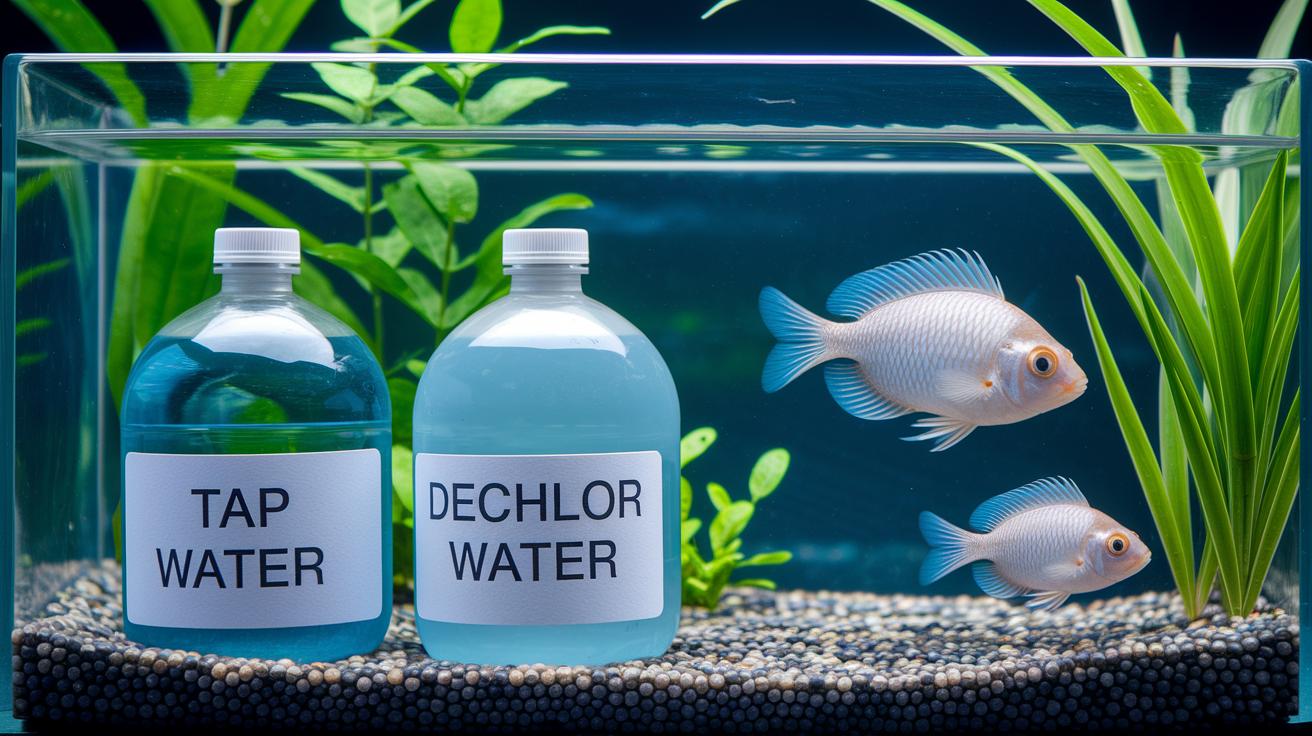
When you fill your tank with municipal tap water, it usually has chlorine, and sometimes even chloramine, to protect against germs. But here’s the catch: these chemicals can stress your fish and hurt the friendly bacteria in your aquarium. Removing them is a must for a happy, balanced setup.
There are three easy ways to get rid of chlorine. First, you can try natural off-gassing. Just let your water sit open for 24 to 48 hours, and the chlorine will slowly evaporate into the air. It’s simple and safe, although it won’t work if you need to change the water right away.
Another option is to use chemical dechlorinators like sodium thiosulfate or sodium bisulfite. These work almost instantly. Just follow the instructions on the package, and your water will be safe to use in no time. Many fish keepers love products like Seachem Prime, Tetra AquaSafe, or API Tap Water Conditioner for this very reason.
The third method involves activated-carbon filtration. As water passes through the filter, the carbon soaks up the chlorine, leaving you with a mix that’s gentle for your aquatic friends. Each method has its charm and benefits, so you can pick the one that fits your schedule and needs best.
Choosing the right approach not only keeps your fish healthy but also helps the good bacteria in your tank thrive, making for a better overall environment.
Optimal Ratios for Blending Untreated Tap Water and Dechlorinated Water

When you do a partial water change, getting the mix just right is key. For a normal change where you replace about 20% to 30% of your tank water, mix equal amounts of fresh tap water and dechlorinated water. For instance, if you have a 20-gallon tank and need to change 20%, you can mix 4 gallons of untreated tap water with 4 gallons of water that has been dechlorinated. This careful mix keeps the water chemistry steady and eases the stress on your fish.
Before you add the blend into your tank, take a moment to check the temperature and pH. Making sure these match your tank’s water helps prevent any sudden shock to your aquatic pals. And if your fish are extra sensitive or you need a special water balance, adjusting these ratios might just be your secret trick.
Different tank situations might call for different mixes. You might use a slight tweak when topping off a tank or if you’ve got lots of plants or a big fish family swimming around. Next, check out the table below for some common ratios and when they’re best used.
| Ratio (Tap : Dechlorinated) | Change Percentage | Recommended Use |
|---|---|---|
| 50 : 50 | 20% | Routine change |
| 80 : 20 | 10% | Small topping-up |
| 20 : 80 | 30% | Heavily planted or stocked tanks |
Ensuring Safe Tap Water and Dechlorinated Water Mixes: Temperature & pH Tips
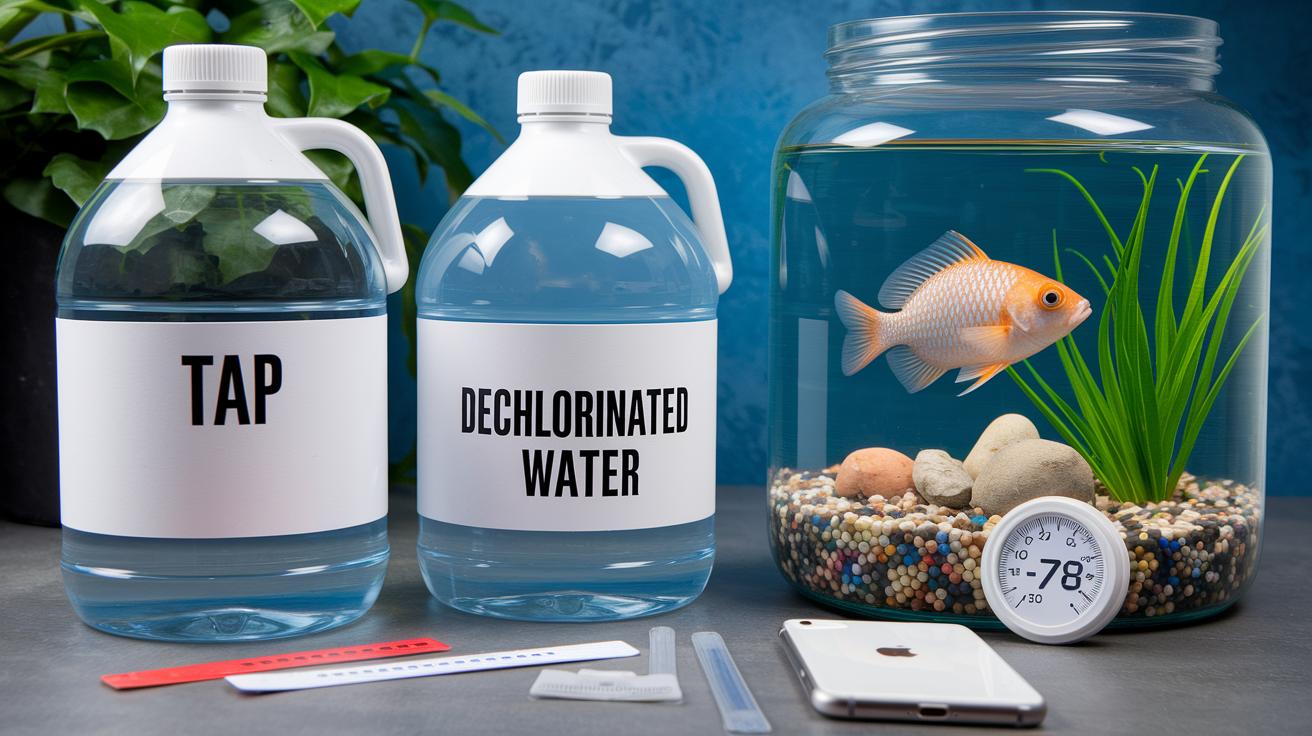
When you mix regular tap water with dechlorinated water, it's important to match the temperature and pH to keep your fish happy. Try to make sure both water sources differ by no more than 2°F. If one is warmer or cooler, use a small heater or let the water sit together until they even out. I remember doing this myself when setting up my tank, it helped create a nice, calm blend for my fish.
Next, check each water batch with a pH strip or meter. If you find that one water's pH is more than 0.2 points off, adjust it slowly with pH up or pH down buffers until they match. Even a tiny difference can stress out delicate fish, so these checks really matter.
After dechlorination, it’s also a good idea to check the water’s general hardness (GH) and carbonate hardness (KH) as they affect your tank’s mineral balance. If the water feels a bit off, add some aquarium-specific minerals to get it just right.
Lastly, pour the mixed water slowly along the side of your tank. This gentle approach stops sudden changes in temperature or chemistry and keeps your tank safe and calm for all its inhabitants.
Testing and Troubleshooting Tap Water and Dechlorinated Water Mixtures
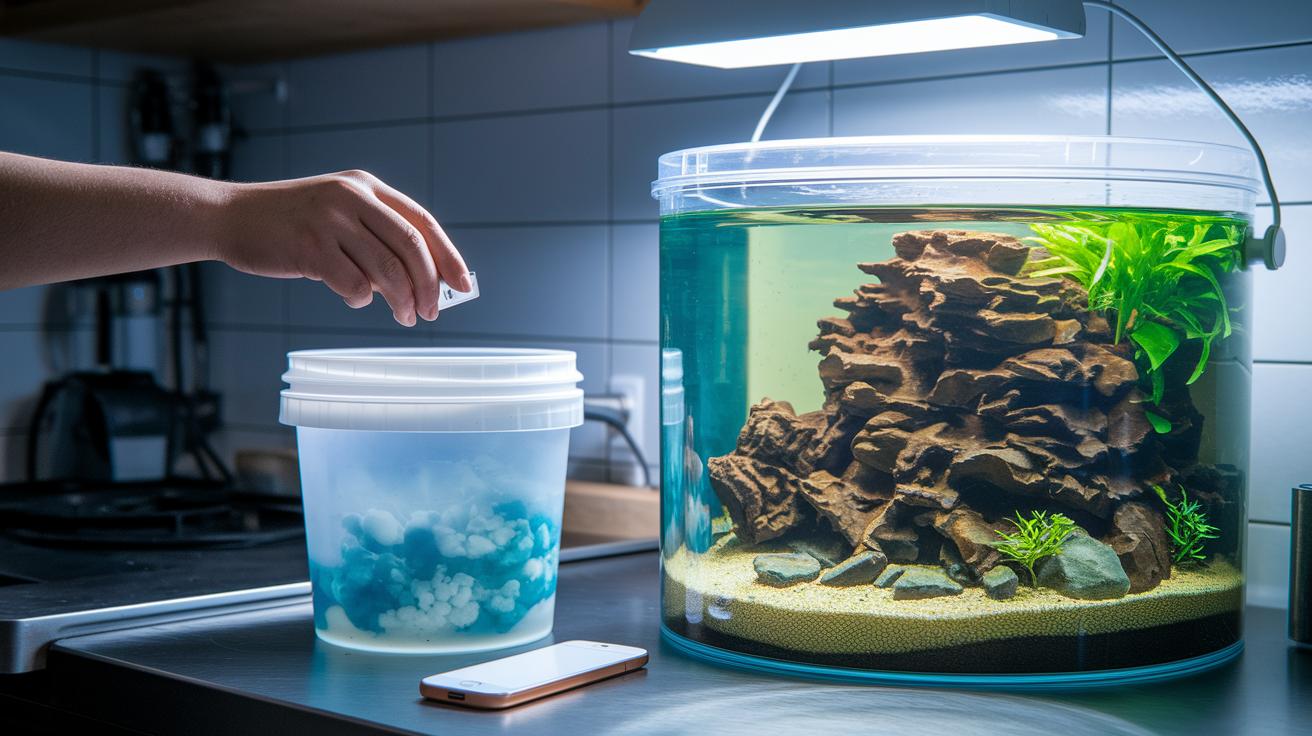
Start with a trusted test kit to make sure there's no leftover chlorine in your water mix. For example, dip a test strip into your water and check for a 0 ppm reading, it can feel like a mini celebration when everything is right. Then, within 24 hours after changing the water, test for ammonia, nitrite, and nitrate to ensure your water stays balanced.
Sometimes, you might notice the water turning a bit cloudy. This could be from using too much dechlorinator, a sudden burst of bacteria, or just extra mixing. It’s a sign that some adjustments are needed.
Here are a few simple fixes to try if your water appears cloudy:
- Rinse your bucket and switch up the mix container.
- Use less dechlorinator in your next batch.
- Increase the water's surface movement to boost oxygen exchange.
- Do a small re-siphon to clear out extra particles.
- Add a booster of helpful bacteria to steady the nitrification process.
If the cloudiness sticks around, check out additional tips at https://sweetfysh.com?p=3585. Testing and troubleshooting in this way helps keep your aquatic pals in a safe, balanced environment where they can thrive.
Advanced Techniques for Mixing Municipal Tap Water and Dechlorinated Water

Inline carbon-block filtration is a smart trick that helps sweep away any leftover organic stuff as you mix your water. Picture it like a friendly net catching tiny particles, leaving your water blend cleaner and safer for your fish.
Right after your water is mixed, using UV sterilization can zap any stubborn germs that remain. This step acts like a gentle, extra rinse, keeping those pesky bacteria from upsetting your tank's calm balance.
Another neat tip is to pair dechlorination with remineralization cartridges. These handy tools keep the water's GH and KH levels steady, which is super important for your fish's health. For larger setups, try setting up a continuous drip-feed system. This slow drip lets the water mix gradually so the chemicals have time to settle, which helps avoid shocking delicate aquatic life.
Think of these advanced techniques as a way to create a perfectly balanced, peaceful water home for your aquatic friends.
Final Words
In the action of perfecting your water changes, this article covered how to blend untreated tap water with treated, chlorine-free water safely. It outlined steps from dechlorination, measuring precise ratios to balancing temperature and pH, all while troubleshooting common issues.
Small adjustments can make a big difference in caring for your beloved aquatic pets. Learning how to mix tap water with dechlorinated water for changes keeps your tank vibrant and your fish thriving. Keep experimenting and enjoying your underwater haven!
FAQ
How do you mix tap water with dechlorinated water for water changes?
Mixing tap water with dechlorinated water means treating tap water first, letting it neutralize for the recommended time, then measuring equal parts and gently blending them. Always match the temperature and pH before adding to your tank.
How do you dechlorinate water for fish naturally?
Dechlorinating water naturally involves letting tap water sit uncovered for 24–48 hours to allow chlorine to dissipate. Alternatively, you can use a chemical conditioner as directed to neutralize chlorine quickly.
How long after adding dechlorinator can you add fish, and how long does dechlorination take?
After adding dechlorinator, wait about 20–30 minutes for the chemicals to neutralize chlorine fully. This waiting period ensures a safe environment for your fish before introducing them to the tank.
Can you add dechlorinator with fish already in the tank?
Adding dechlorinator while fish are present is safe when you follow the correct dosage guidelines. The dechlorinators work quickly to neutralize chlorine, protecting your fish from harmful chemicals.
How much dechlorinator should be used for a water change?
For a typical water change, use about one drop of dechlorinator per 10 gallons of water. Always refer to the product’s instructions to avoid overdosing or underdosing.
Can you dechlorinate tap water, and how do you do it for plants?
Dechlorinating tap water is possible by letting it sit or using a chemical agent. For plants, treat the water similarly so that chlorine is removed, ensuring it won’t harm your greenery or aquatic life.