

Have you ever stopped to wonder if the lights in your reef tank are truly helping your corals? Many folks assume any light will do the trick, but using smart lighting can really boost the life of your corals.
Modern LEDs bring a burst of bright, clear colors to your water, much like warm rays of sunshine dancing on a sandy beach. With just the right mix of colors and a gentle glow, your corals can grow stronger and show off their natural, vibrant hues.
Imagine your reef turning into an underwater garden where every coral thrives and sparkles. It’s like watching a gentle tide of life, refreshing and full of energy!
Fundamentals of Reef Aquarium Lighting: Ensuring Optimal Coral Growth

Corals need good light to live, and it all comes from the tiny algae living inside them. These special partners use light to make food in a process called photosynthesis, which is why having the right spectrum is so important. Imagine back in the day when reef keepers used clunky metal halide lights, even with as little as 50 PAR, steady light helped the corals thrive.
Understanding the mix of colors in your light and how strong it is can really make a difference. Corals use pigments like Chlorophyll A that love violet (around 440 nm) and red (about 675 nm) light, while others work with nearby shades. Kelvin ratings tell you the color tone, a bulb around 10,000K gives off a clear white light, while bulbs rated between 15,000K and 25,000K shine with a cool blue that reminds you of the open ocean. Even though old-school metal halides can reach up to 1200 PAR, a gentle and steady light is usually just what your reef needs.
| Type | Typical Wattage per Fixture | Pros | Cons | Best Use |
|---|---|---|---|---|
| LED | ~200W | Energy efficient, adjustable spectrum, boosts fluorescence | Can cast sharp shadows, electronics might wear out sooner | Medium to large tanks with different coral needs |
| T5 Fluorescent | ~100W | Great color, even light spread | Spectrum fades in 9-12 months, more upkeep | Tanks that need a soft, uniform glow |
| Metal Halide | 2×400W + 4×110W (75 gal) | Super intense light, natural shimmer | High energy use, can produce too much heat | Large tanks with corals that demand high light levels |
| Hybrid | Varies | Mixes style with efficiency | Higher setup cost | Systems looking for both savings and a pretty display |
Keeping your lighting steady and matching it to your specific corals is key for a thriving reef. The right mix of colors and controlled brightness helps your coral friends carry on their essential work, making your underwater world vibrant and healthy.
Spectrum and Intensity Guidelines for Reef Aquariums
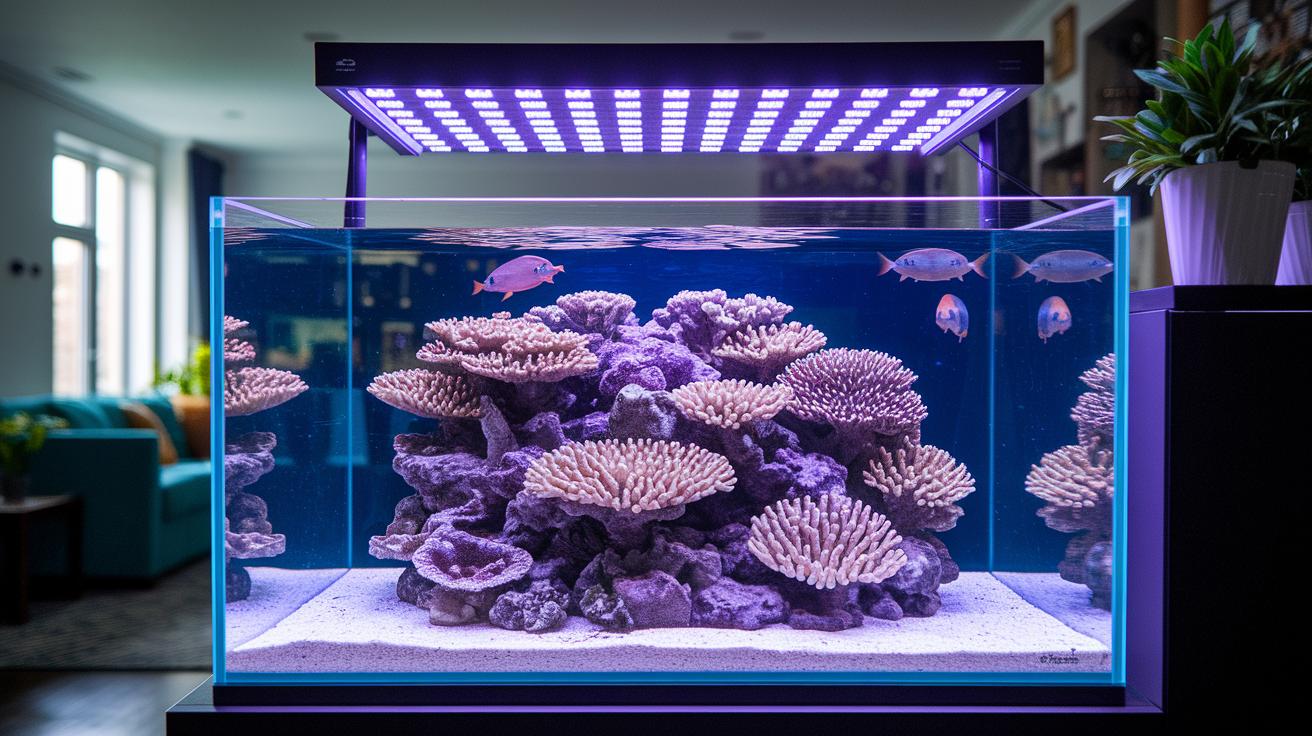
When you're setting up your reef tank, getting your lighting just right is like choosing the perfect spot by the water’s edge. You see, the spectrum is simply the range of colors your light shows off, while the intensity tells you how powerful that light is as it travels deeper into your tank. Both play a big part in keeping your corals looking lively and feeling great.
For example, think of it like this: soft corals do well with a gentle glow at 50 to 100 PAR, LPS corals enjoy a slightly stronger shine at 75 to 150 PAR, and SPS corals need a bright burst between 200 and 400 PAR.
The magic mostly happens in the violet-blue splash of light, especially around 440 nm. Many folks also talk about Kelvin ratings when discussing lighting. A setting near 10,000K gives you a bright, true white light, while higher Kelvin numbers bring out a bluer tint that really makes coral colors glow.
A steady daily routine is just as important as the right colors and brightness. Corals usually thrive on around 8 to 12 hours of light each day. Even if two tanks have different brightness, sticking to a regular schedule can often work wonders for coral growth. It’s all about creating that perfect underwater vibe where every ray and ripple contributes to a happy, vibrant reef.
Top Reef LED Fixtures: Reviews and Buying Guide
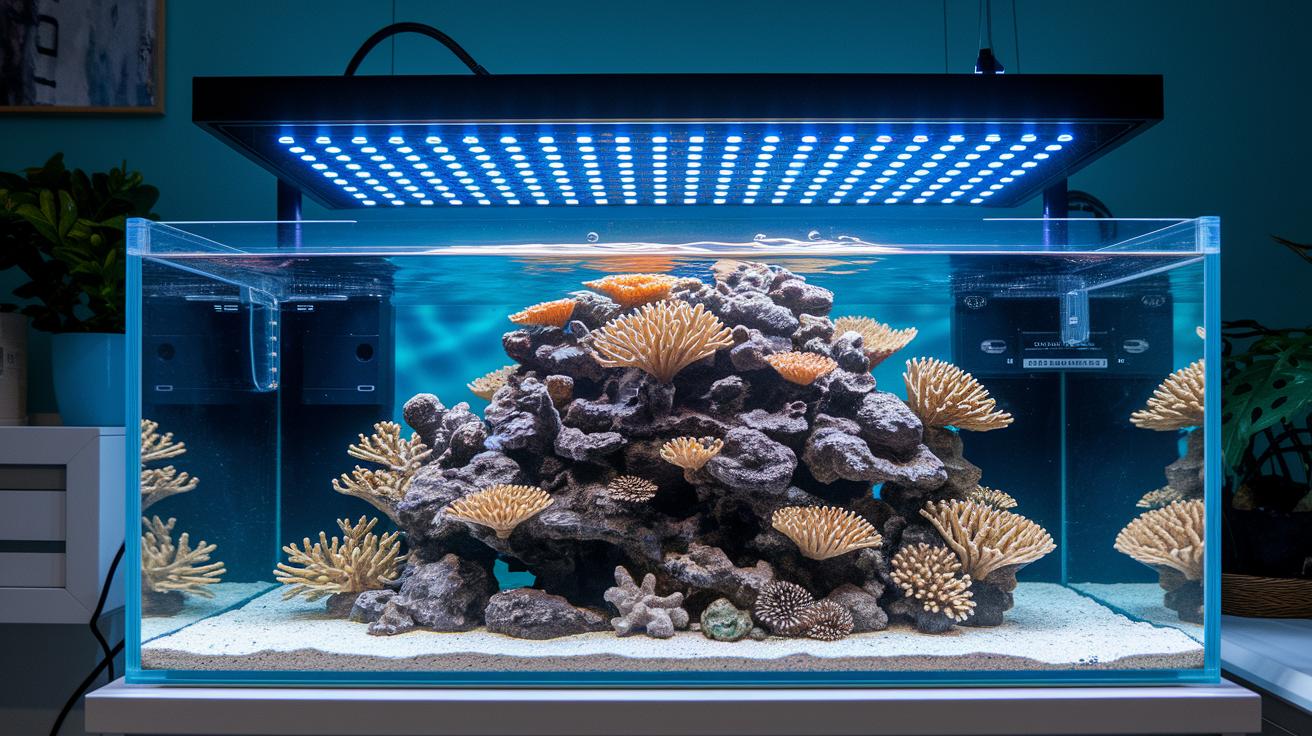
LED lights are truly making waves in reef aquarium setups. They work like magic by saving energy, letting you fine-tune the brightness, and even creating a natural ocean glow that your corals will love. It’s like having the soft ripple of the ocean right in your tank!
Take Coralife LED Lights for Saltwater Aquariums, for example. These lights have earned a lot of praise because they strike a perfect balance between power and efficiency. They offer a few preset modes that can fit the needs of different coral types, keeping your setup bright and lively without hiking up your energy bill. It’s a reliable choice when you need a steady and vibrant light show.
Then there’s the Coralife Seascape Smart LED Light, which really ups the ante with app control. With settings like bright white, a calming blue moon glow, and full-spectrum RGB, you can change the mood of your aquarium with a quick tap or swipe on your phone. Imagine creating a natural cycle from morning to night that feels as soothing as the ocean tide.
The Aqueon BlueIQ system brings something extra to the table by not only controlling your lighting but also keeping an eye on your water conditions through a smartphone app. It’s a neat blend of light management and overall tank monitoring that makes adjusting your setup feel effortless.
In truth, each of these reef LED systems has its own charm, so your choice might depend on the size of your tank, your design preferences, and your budget. For more tips on where to place your lights just right, check out the information on aquascaping light at https://sweetfysh.com?p=3290.
Installation and Positioning of Reef Aquarium Lighting

Getting your reef lighting in the right spot is the first step toward a happy tank. When everything is set up just right, the light softly bathes your coral tops without heating things up too much or casting strong shadows. Plus, a cool setup helps the electronics last longer by keeping them comfortable.
Start by measuring your tank and checking how tall your corals are. This gives you a clear idea of where to place your fixtures.
Next, choose the mounting brackets or hanging kits that best match your tank. It’s a bit like picking the right frame for your favorite picture.
Then, position your lights about 6 to 12 inches above the coral tops to hit the target PAR, the perfect balance of light needed for them to flourish.
After that, set up a smooth light cycle. A good trick is the 1-8-1 routine: one hour to ramp up, eight hours at full strength, and one hour to wind down, just like how the sun rises and sets.
Finally, keep an eye on the PAR with a light meter. If some areas of your tank seem too bright or too shady, adjust the height a bit until the light spreads evenly.
Following these steps not only spreads the light beautifully across your tank but also helps the electronics and the diodes share the work evenly. A secure mount and regular checks can prevent hotspots or dim spots, ensuring your reef lighting stays durable and your corals enjoy a natural, soothing light cycle every day.
Maintenance Tips for Sustainable Reef Aquarium Lighting
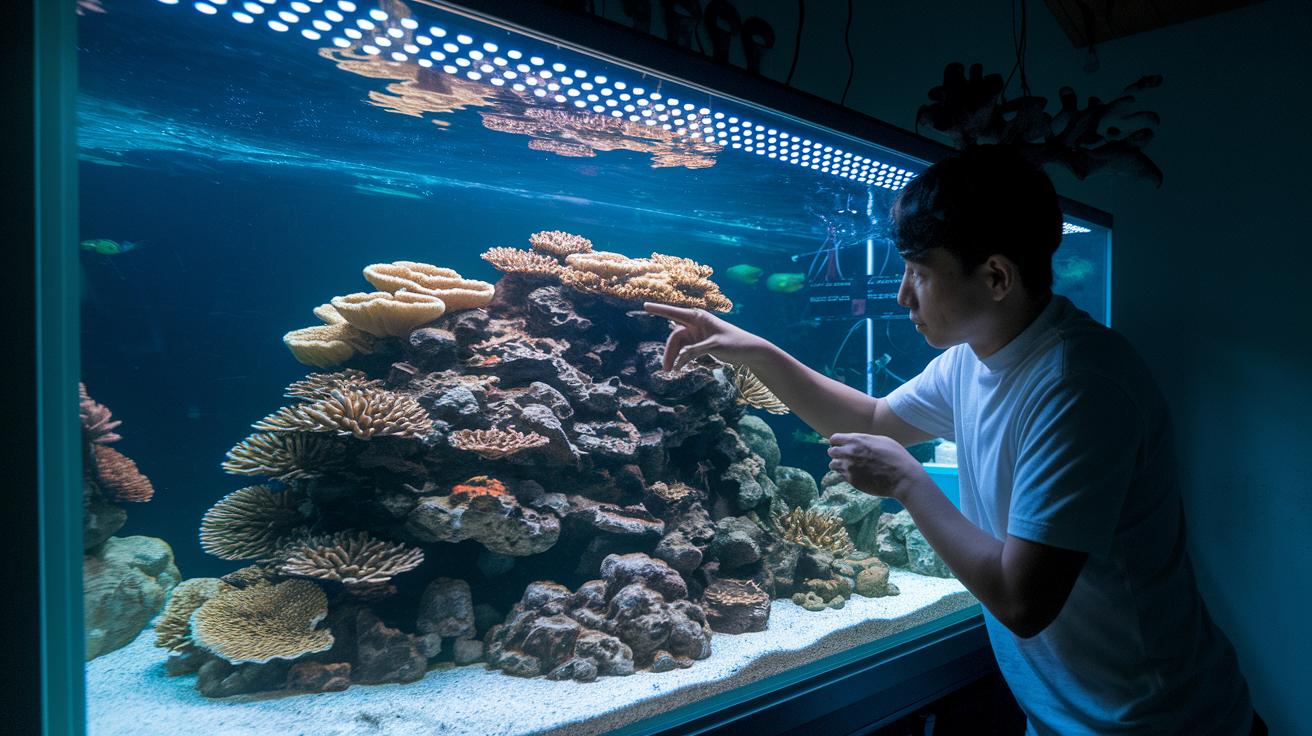
T5 bulbs tend to lose their bright glow in about 9 to 12 months, so it’s a smart idea to swap them out every year. LED modules usually shine on a bit longer, often needing replacement every 3 to 5 years, as suggested by the maker. It’s a bit like giving your favorite bike a tune-up, keeping everything running smooth and bright.
Keeping your optics clean is just as important. Every month, give the lens covers and heat sinks a good wipe to clear off dust and debris. A clean setup lets the light shine through perfectly and helps the cooling system work just right; it’s like cleaning your window to let that warm sunshine inside.
Also, check the electronic parts, like drivers and cooling fans, at least once a quarter. A quick look can catch little problems before they turn into big issues. If you start to notice any signs of trouble, it might be time to change out the faulty parts so your reef tank keeps glowing beautifully.
Advanced Automation and Control in Reef LED Lighting

Programmable controllers have really changed the game for reef tanks. They let you blend different light colors and create lighting scenes that change throughout the day, much like the way sunlight filters over a sandy reef. It almost feels like you’re mimicking the natural world right in your own tank, which does wonders for your coral's health.
Now, managing the light spectrum and scheduling the right intensity has never been simpler. Many controllers gently ramp up light during a simulated sunrise and ease it down for sunset, closely following nature's own rhythm. This steady daily routine helps keep your coral relaxed and your tank balanced, much like the calm flow of water on a quiet morning.
Some of these smart reef lighting systems even have cool features like dimming, which can lower heat stress by mimicking a shady overcast day. They also offer wave patterns that make the light dance over the tank, much like sunlight flickering on moving water. And with remote diagnostics, you can keep an eye on the system’s performance and quickly fix any snags before they disturb your underwater world.
In the end, choosing the right controller depends on how complex your tank is and how easy you want your setup to be. Simple systems might work great with basic programmable functions, while bigger, more intricate reef tanks will really shine with added spectrum control and remote access options.
Troubleshooting Common Reef Aquarium Lighting Issues
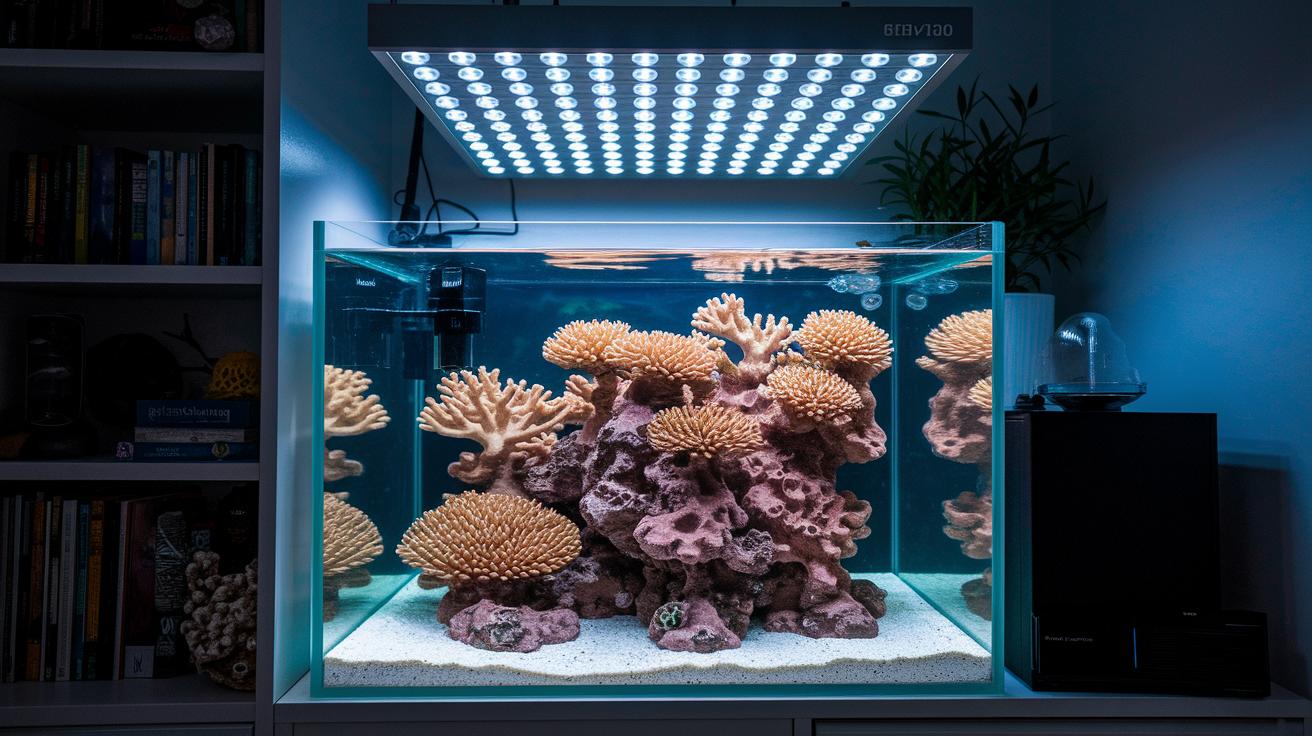
Have you ever seen dark patches or overly bright spots in your tank and wondered what's wrong? It might be that your corals are not getting the soft, even light they need. Try adjusting your lights a bit or adding a little extra lighting. Even moving a light a few inches can make a big difference in spreading out the brightness and keeping your corals happy.
Sometimes, you might notice a change in the color of your lights, like the vibrant hues starting to dull. This usually means that parts like the diodes or drivers are beginning to fail. Running a quick color test every month can help catch these issues early, ensuring your corals still get the proper light to thrive.
If you see your lights behaving oddly or dimming unexpectedly, it may be due to a firmware glitch. Updating or refreshing the controller firmware can often set things right, smoothing out the light output.
Overheating is another common culprit that can cut your light’s lifespan short. Make sure the cooling fans are working and that the ambient temperature stays steady. Good cooling helps protect the electronics and diodes, keeping your coral tank bright and healthy for the long run.
Final Words
In the action of exploring coral care, we’ve seen how reef aquarium lighting fuels vibrant underwater scenes. The article covered everything from the basics of light spectra and intensity to smart, user-friendly control options. It also offered hands-on tips for correct installation, regular cleaning, and troubleshooting any issues. With reef aquarium lighting in mind, smart settings and upkeep can bring a lively, healthy underwater home. Keep the energy positive and let every splash of light inspire you to create a thriving aquatic haven.
FAQ
What is the best lighting for a reef tank?
The best reef tank lighting uses full spectrum LEDs that mimic natural sunlight, delivering balanced intensity and colors to support coral health and photosynthesis.
How long should reef aquarium lights be on?
Reef aquarium lights typically run 8 to 12 hours daily, including gentle ramp-up and ramp-down, to help corals photosynthesize and rest effectively.
Do corals prefer blue or white light?
Corals respond to both blue and white light; blue light can enhance vibrant colors while white light supports overall growth and balanced photosynthesis.
Is 12 hours of light too much for coral?
Twelve hours of light is usually suitable for many corals, provided there’s a proper ramp-up and rest period that prevents stress and promotes healthy photosynthesis.
What reef lighting options are available, like Noopsyche, Nicrew, and Radion Reef lights?
Options such as Noopsyche, Nicrew, and Radion Reef lights offer versatile full spectrum settings and programmable features, helping you tailor your tank’s lighting to meet different coral needs.