

Ever felt like your saltwater tank could use a burst of life? Picture arranging live rocks and vibrant coral so your tank looks like a tiny natural reef, with playful arches and hidden nooks for your fish to explore.
Imagine each rock forming a new adventure, much like a secret pathway in a wild underwater garden. It’s a fun way to rearrange your aquascape that not only delights the eye but also creates a serene, welcoming home for your aquatic friends.
Saltwater Aquarium Aquascaping Ideas: Radiant Aquatic Charm
When designing your saltwater setup, it’s all about creating a space that feels as natural as your favorite ocean reef. A smart aquascape arranges live rocks and corals just right to capture nature’s balance. Keeping things simple, like the idea of less is more, gives your fish plenty of room to swim and explore.
- Rule of thirds for rock placement
- Creating focal "islands" and channels
- Incorporating caves and overhangs
- Choosing varied rock shapes and sizes
- Leaving vertical space above for SPS growth
- Balancing open swimming areas with structure
- Using epoxy or marine-safe cement for stability
- Testing layout with cardboard mock-ups
Using the rule of thirds helps line up your rock clusters along invisible guides, leading the eye to natural focal points. By arranging rocks in little islands and channels, you encourage smooth water flow and create fun spots for your fish. Adding caves and overhangs not only gives depth but also offers cozy hideaways for tiny critters like shrimp. Mixing up rock shapes and sizes adds texture, and leaving some room above lets tall corals, like SPS, stretch out without feeling crowded.
A balanced design means you have plenty of open swimming space mixed with solid structures. It’s important to keep everything stable, so using marine-safe cement or epoxy keeps your rocks in place even when the current gets a bit strong. Trying out your layout with cardboard mock-ups is a clever way to see what works best before you set everything in stone. In the end, these ideas help your corals grow strong while inspiring playful fish behavior, creating an underwater scene that feels both lively and inviting.
Key marine aquascape design principles for reef tank layouts
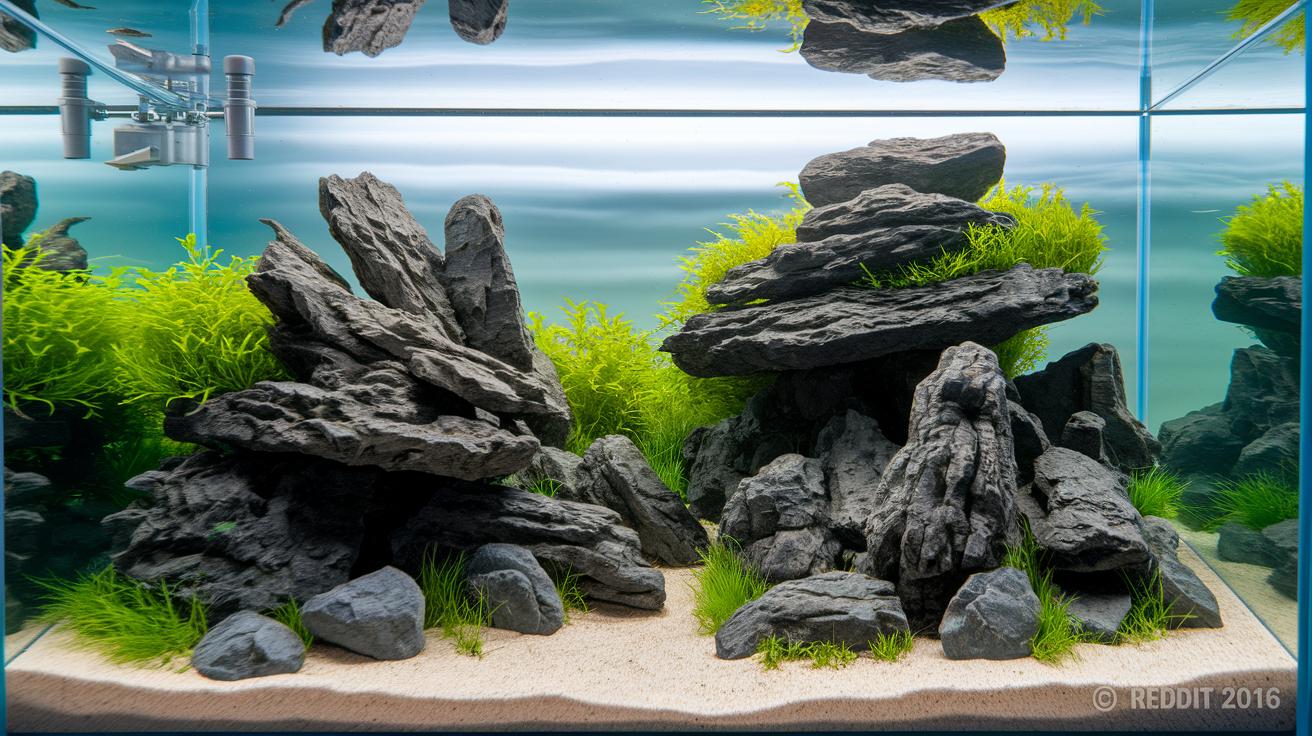
Start by lining up your rock clusters along a neat grid for a balanced look, but let the natural shifts in color and texture also guide your design. Imagine a standout rock that fits the grid yet casts soft patches of light and shadow, creating a cozy nook where little creatures can hide and play. I once placed a curved rock in a spot where the gentle light softened its edges, forming a perfect hideaway for shrimp.
Add layers to your aquascape not just to give it depth but to invite subtle changes in texture and tone. Instead of arranging rocks in a simple stack, mix in different shapes and sizes to mimic nature’s gentle flow. Think of these layers like soft brushstrokes in a painting, adding visual interest without overwhelming the scene.
Remember to include features that boost life in your tank. Overhanging rocks do more than catch the eye, they offer safe retreats for smaller tank residents. Try experimenting with varied rock slopes to create different micro-habitats, all while keeping the overall rhythm and harmony of your reef setup.
Solid foundations: rockwork strategies in saltwater aquarium aquascaping ideas
Substrate selection
Begin your aquascape with a substrate that feels just right. A sand layer about 1–2 inches deep mimics a natural reef bed beautifully. Choose grains between 0.2 and 0.5 mm so they settle gently, just like tiny pebbles on a quiet shore. Keep in mind that live sand invites good bacteria, and aragonite works like a natural fixer to keep pH levels in check. This careful choice sets a strong base for your larger rocks while letting the sand move naturally without blockage from stiff underlays.
Rock structure and support
When stacking rocks, mix up the shapes to create depth and interest. Think of arranging them like a little pyramid to get a tiered look, or form rock islands that leave open pathways for your fish, like a setup where a 225-gallon tank used 100 lbs of rock. You can even try curving arches that guide your fish through hidden tunnels. No matter the style, make sure to balance the rocks well. Distributing the weight evenly is key to keeping your structures steady and safe.
Resin and epoxy adhesives
Hold your creation together with marine-grade epoxy, which is as sturdy as concrete once it sets. Apply a thin line of the epoxy along where each rock meets another to lock them firmly in place. Most quality epoxies set in about 4–6 hours, so you get a speedy yet long-lasting bond, perfect for a saltwater home. This careful adhesion not only showcases your artful aquascape but also ensures that your rock formations stay secure over time, helping create a well-balanced underwater world.
Optimizing water flow and balanced saltwater ecosystems through layout

When it comes to keeping your tank lively and healthy, water flow is the secret ingredient. It helps minimize dead spots where those pesky nitrates and phosphates can build up. As your corals branch out, they might block water movement if you don’t plan wide enough channels. Setting aside extra space now means you avoid cramped corners later. Think of your layout like a living sketch that adjusts as your aquatic garden grows.
A smart setup uses neat pathways to let water travel easily around the tank. Adding powerheads or wavemakers can give your water that gentle push, making sure your tank's water is refreshed between 10 and 20 times its volume each hour. This steady flow brings in new nutrients and carries waste away, giving your fish and corals the best chance to thrive. It’s like a gentle, cool breeze sweeping over your underwater world.
Before becoming a respected reef keeper, a hobbyist discovered that slight changes in water flow prevented a sudden spike in algae growth, transforming a struggling setup into a vibrant underwater scene.
| Equipment | Flow Rate (GPH) | Coverage Area (sq ft) |
|---|---|---|
| Powerhead | 800–2000 | 2–5 |
| Wavemaker | 1000–3000 | 3–6 |
| Sump Return Pump | 1200–4000 | 4–8 |
Keeping a close eye on your water flow and tweaking your tank setup with these tools ensures a balanced saltwater world. This balance helps your corals grow strong and your fish swim happily, making every moment with your tank a refreshing dive into nature.
Artistic coral placement and color contrast in saltwater aquarium aquascaping ideas
When setting up your coral display, start by using a color wheel to mix colors that work well together. For example, try placing blue SPS corals next to orange LPS ones to make the colors pop. Did you know that on a vibrant coral reef, nature’s own artists mix hues like they’re painting with living brushes? This surprising blend not only boosts your tank’s beauty but also guides your eye to explore every corner.
Next, consider using a dark or black backdrop to enhance the coral colors even more. A rich, deep background lets the coral’s glow shine like little sparks in the water and creates a cool sense of depth. It’s a bit like displaying a masterpiece on a canvas that makes every detail stand out.
Mix up natural textures by placing branching corals beside plating ones. This side-by-side display creates a nice variety, much like the layers of a natural reef. Think of it as combining soft curves with sharp edges to form a balanced underwater scene.
Lastly, pay close attention to coral spacing and grouping. Try clustering similar colors together to create little pockets of beauty throughout your aquatic gallery. It’s all about experimenting and finding a flow that feels just right, like arranging a cozy fishy home.
DIY saltwater aquascape projects: tools, materials, and layout testing

Here’s a friendly guide to jumpstart your saltwater aquascape journey. We’re sharing a little DIY toolkit with clear, practical steps so you can set up a tank that not only looks stunning but works perfectly too. Start by gathering the right gear, then test your design using simple, budget-friendly methods before you commit everything in place.
Tools & Materials
- Painter’s tape – A reliable, residue-free tape that helps you mark areas clearly and keep pieces temporarily in place.
- MDF cutouts – Durable pieces of MDF cut into shapes that mimic rocks, adding a natural touch.
- Zip-ties – Tough, corrosion-resistant ties that secure your structures safely, much like tying together a school of fish.
- Stainless steel rods – Strong supports used to create a stable framework for your design.
- Piping – Lightweight PVC pipes that build a flexible structure, guiding your layout like gentle underwater currents.
- Marine epoxy – A saltwater-safe adhesive that holds everything together with a rock-solid bond.
- Safety gloves – Protective gear to keep your hands safe during your creative setup.
Layout Testing Methods
Before you fix anything for good, try out your ideas with some cardboard mockups. Lay out these paper versions of your rock formations and key elements on a flat surface to mirror your aquarium’s floor plan. Use a tape measure to make sure every piece fits well within your tank’s space. Next, do a dry run by arranging the MDF cutouts and other components as you plan. This trial run lets you see how each element interacts while making sure there’s plenty of room for smooth water flow and happy, swimming fish. Testing your layout helps avoid surprises later and gives you a clear picture of your design coming to life, like watching the gentle ripple of water over a well-set reef.
Future-proof maintenance tips for thriving saltwater aquarium aquascaping ideas
Make sure to leave about 3 to 4 extra inches above your rock formations. This extra space acts like a mini skylight, letting tall SPS and LPS corals stretch out and soak up light without feeling crowded.
Patience is key when setting up your tank. Let your new rock structures cure for 4 to 6 weeks before adding any sensitive creatures. I once heard a fellow aquarist say that waiting a month saved his entire setup from early troubles. This time helps the rocks bond firmly in the tank, making everything more stable.
Keep regular maintenance gentle so you don’t stress out your aquatic friends. Instead of a heavy cleaning from top to bottom, make subtle changes when needed. This light touch helps prevent algae blooms and keeps your tank calm and healthy.
By taking it slow and steady, you not only create a stunning reef layout but also promote lasting wellness for your corals and fish. With these easy tips, your underwater paradise will stay vibrant and well-balanced for years to come.
Final Words
In the action, the post showcased key design tips by mixing rock placement, coral focal points, and DIY layout testing. It emphasized blending visual appeal with system care while ensuring safe live rock formations and water flow.
The insights offer a solid guide for anyone applying saltwater aquarium aquascaping ideas for vibrant, thriving reef tanks. Every small step builds toward a balanced marine display and a healthier aquatic life. Cheers to creative, effective aquascaping that brings underwater views to life!
FAQ
What are some simple, small, and DIY saltwater aquarium aquascaping ideas for beginners?
The simple, DIY aquascaping ideas focus on compact layouts with moderate live rock, focal islands, and channels. They help you create a natural-looking reef that’s easy to set up and pleasing to the eye.
What options are available for buying ready-made reef aquascapes?
The ready-made reef aquascapes come as curated rock and coral displays crafted by experts. They offer a convenient choice for setting up a striking marine environment without extra DIY work.
What is the rule of aquascaping and the rule of thirds in aquascape design?
The rule of aquascaping, including the rule of thirds, guides rock and coral placement along an imaginary grid. This method creates a balanced, naturally flowing display that enhances the overall aesthetics of your tank.
What plants can be used in a saltwater aquarium aquascape?
Saltwater aquascapes often use corals and macroalgae instead of traditional plants. Macroalgae like Caulerpa add natural color and texture, giving your marine tank a refreshed, living touch.
What are the disadvantages of saltwater aquariums?
The disadvantages of saltwater aquariums include higher initial costs, more involved maintenance, and sensitivity to water chemistry. They require careful care and planning to keep the marine life healthy and vibrant.