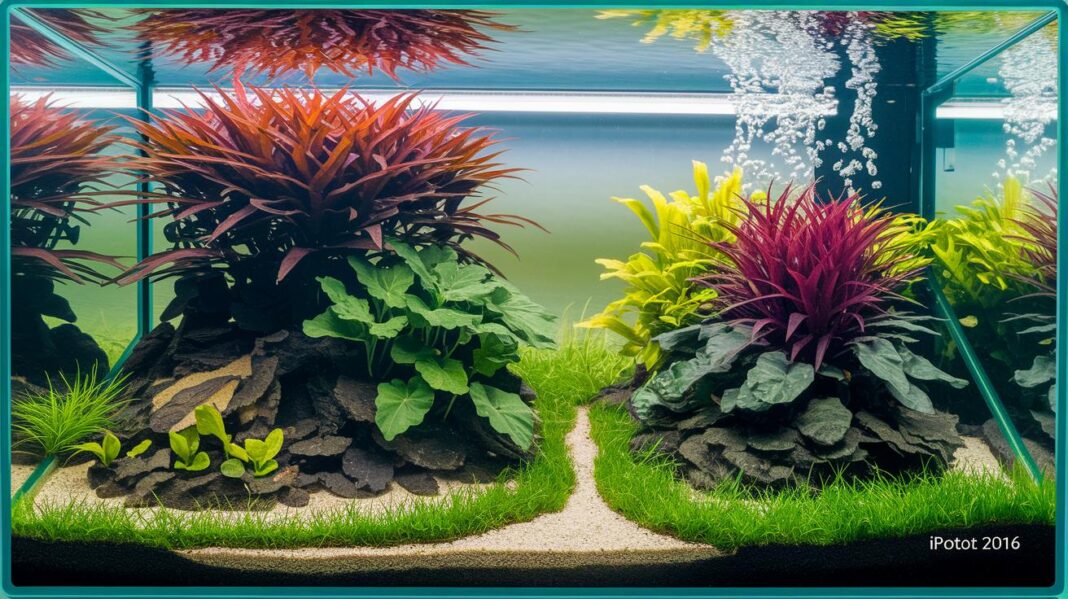

Ever notice how some planted tanks shine with vibrant energy while others seem a bit dim? Aquarium lighting isn’t just for show, it gives your tank’s plants the energy they need to thrive, kind of like sunlight for a garden.
Think of your lighting setup like tuning your favorite radio station. A small tweak here or there can create the perfect underwater vibe, brightening your aquatic garden with all the warmth and life you cherish.
In this chat, we share simple tips on adjusting light levels, picking the best LED choices, and keeping your water world as stunning as a clear, calm pool on a summer day.
Mastering Aquarium Lighting Fundamentals for Planted Tanks
Aquarium lighting plays two big roles. It not only makes your tank look beautiful but also gives your plants the energy they need to make food through photosynthesis. Without enough light, your plants can’t thrive, and your underwater world might lose that vibrant, lively feel we all love. Think of your lighting setup as both a pretty decoration and a vital power source.
Every type of aquatic plant has its own light taste. Some enjoy a gentle glow, while others do best under a brighter shine. Adjusting your light is a bit like tweaking a recipe to match your favorite flavors. Start with a soft light, then slowly brighten it until you see your plants perk up and grow naturally.
Today’s LED lights are a real game-changer. They deliver more useful light (that’s PAR, or Photosynthetically Active Radiation, which is just a fancy way to say they help plants grow) while using less energy. Plus, they spread light evenly and can be fine-tuned for your plants’ specific needs. When you set up your tank just right, you create a space where both beauty and healthy plant growth can flourish.
Regular checks and small tweaks keep your planted tank lively and in balance. Watching those lights work their magic might even remind you of the gentle ripple of water dancing over smooth stones, a simple pleasure that makes every day feel a little more special.
Choosing Efficient Lighting Fixtures for a Thriving Planted Tank
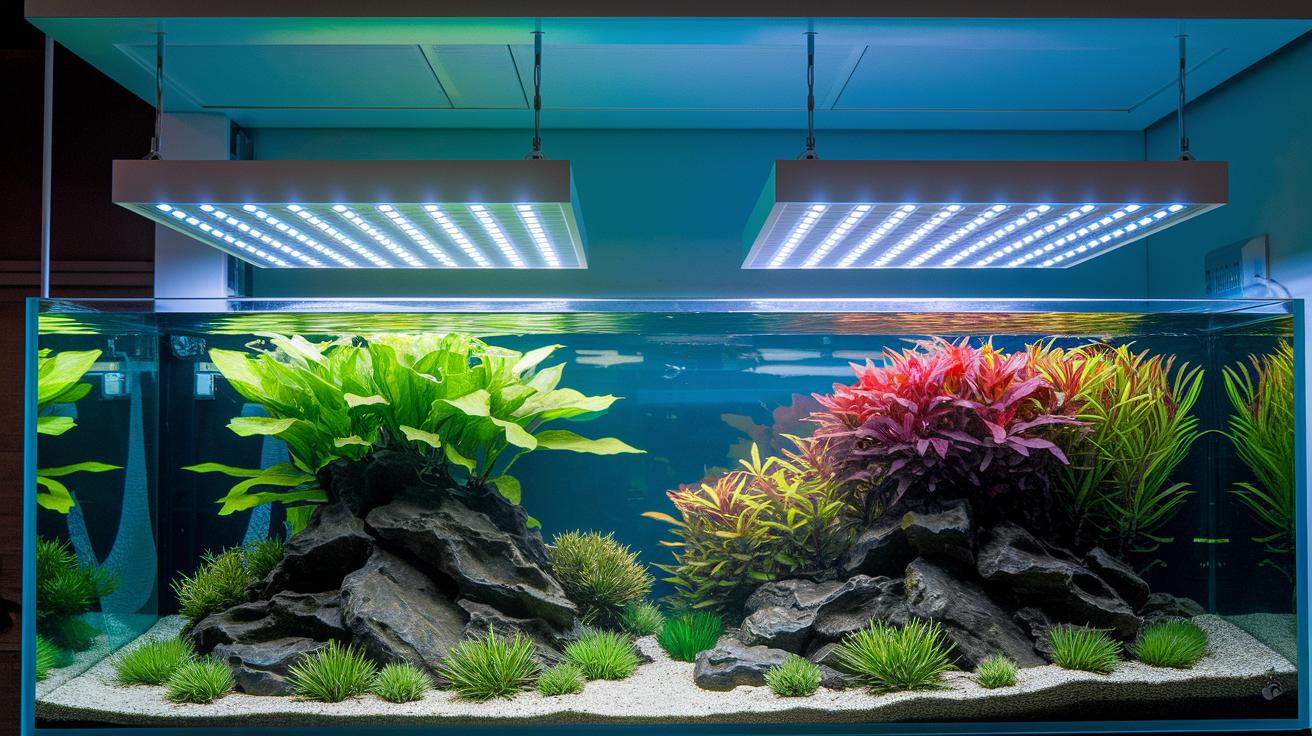
Quality LED lights work like that dependable buddy in your aquatic space. They shine brightly using little power, letting your underwater garden soak up the perfect glow. Just as gentle sunlight warms a garden, these LEDs help your plants transform light into healthy growth.
Pendant-mounted LED bars add a sleek look to your setup. They hang neatly above the water, showing off every detail of your tank. But if you hang them too high, say, more than 4 inches above, there’s a chance they might lose a bit of their sparkle unless they’re built to handle that gap. Picture a pendant LED perfectly set at just the right height, bathing your plants in clear, lively light like the soft morning rays that wake up a sleepy garden.
Many off-the-shelf aquarium kits don’t spread the light evenly or cover the full range your plants crave. That’s why it’s best to choose eco-friendly fixtures made just for planted tanks. Look for models that blend power and even light distribution so every nook of your aquatic world gets its share of that bright, healthy illumination.
Spectrum and PAR Management in Aquarium Lighting
Keeping your planted tank happy means you need to get the right mix of light and color. PAR, or Photosynthetically Active Radiation, is the light that plants really use to grow. Lumens only show brightness as we see it, but they don't tell you how much light is useful for your plants. Fun fact: while many people worry about lumens, it's actually PAR that powers underwater plant life.
Your plants love red light around 660 nm and blue light near 450 nm. Even if a light boasts a high CRI or a 6500 K rating, those numbers are often more about the sales pitch than what your tank truly needs. Instead of chasing the idea of a full spectrum, focus on these important wavelengths. Many advanced setups, like those on the International Space Station, work well using just red and blue LEDs.
If you want to fine-tune your tank lighting, try using a PAR meter to play with different light levels. You can adjust the mix of red and blue light so that each plant gets just the right amount of energy, without giving algae too much of a boost. It’s a bit like mixing your favorite smoothie, simple ingredients making a perfect blend.
Keep an eye on your PAR readings, aiming for about 100 µmol·m⁻²·s⁻¹ at the substrate. This careful tuning not only helps your plants thrive but also makes your tank look striking. Ever notice how a small change in light can make your underwater world come alive?
Photoperiod Strategies for a Thriving Planted Tank
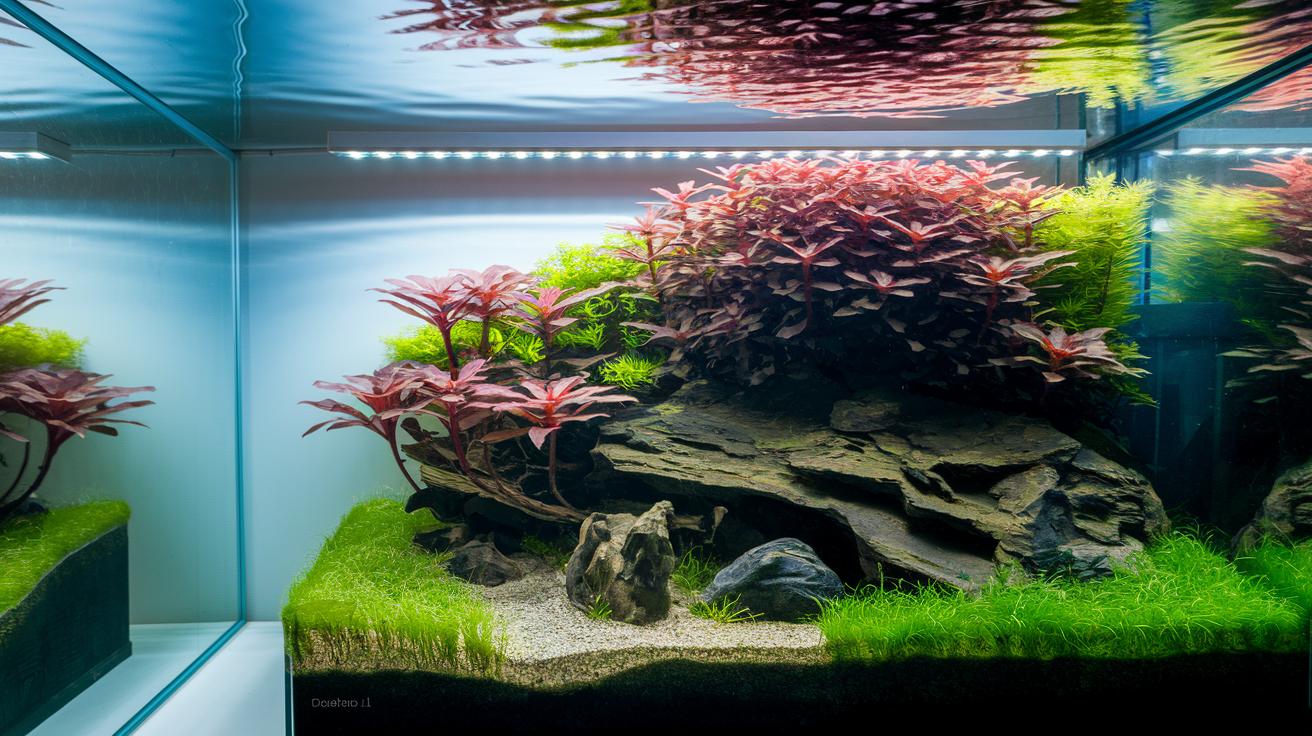
Start your aquatic garden adventure by giving your plants about 6–8 hours of light each day. As they bloom and grow, slowly extend the light to 8–12 hours. Think of it like watching the soft glow of dawn spread across a quiet lake, it gives the delicate plants a chance to adjust without feeling rushed and helps them make their food through photosynthesis.
If you notice a green film or algae on the tank surfaces, it might mean there's too much light. When that happens, either cut back on the light hours or adjust your fixtures so that the bright spots are softened. It's all about finding that sweet balance to keep your underwater world both healthy and beautiful.
Implementing Automated Timers
Using an outlet timer is a simple trick to keep your tank’s light cycle steady. Start with shorter light periods and then gradually lengthen them as your tank grows, much like slowly turning up the morning sun. This way, you remove the guesswork and create a calm, consistent routine for your aquatic friends.
Dawn and Dusk Simulation Techniques
To make your tank feel even more natural, consider dimmable lights or a ramp-up feature that mimics sunrise and sunset. This gentle transition helps ease your plants into the day's cycle and mirrors nature's own rhythm, giving your tank that authentic, wild-habitat feel.
Maintenance and Troubleshooting for Aquarium Lighting
Dust, mineral buildup, and even a little algae on your light covers can reduce your PAR readings by about 15%. This means your plants might not get the boost they need even when the lights look bright. To keep your underwater garden healthy, try cleaning your light fixtures every 4–6 weeks with a soft cloth and an aquarium-safe cleaner. This simple routine helps keep your lights working their best and prevents those sudden bursts of algae growth that can really surprise you.
Keeping a simple journal of your light settings, how your plants react, and any algae issues can be a real lifesaver. It’s like having your own little logbook for your aquarium, helping you fine-tune your setup over time until everything flows just right.
Here's a quick checklist to guide your routine maintenance:
| Step | Description |
|---|---|
| 1 | Check fixture mounts and cables |
| 2 | Wipe lenses and covers |
| 3 | Inspect LED diodes for any dimming or failure |
| 4 | Confirm the timer is working accurately |
| 5 | Use a PAR meter to check your output |
| 6 | Adjust the height or angle as your plants grow |
| 7 | Log any changes and observations |
Taking these steps builds a strong routine that makes managing your aquarium easier and more fun. Think of it like caring for a beloved garden, your little underwater world deserves regular attention. With every tweak and cleaning session, you’re not only restoring your light’s performance but also giving your aquatic garden the balanced, healthy light it needs to truly shine.
Enhancing Aquarium Lighting with Automation and Upgrades
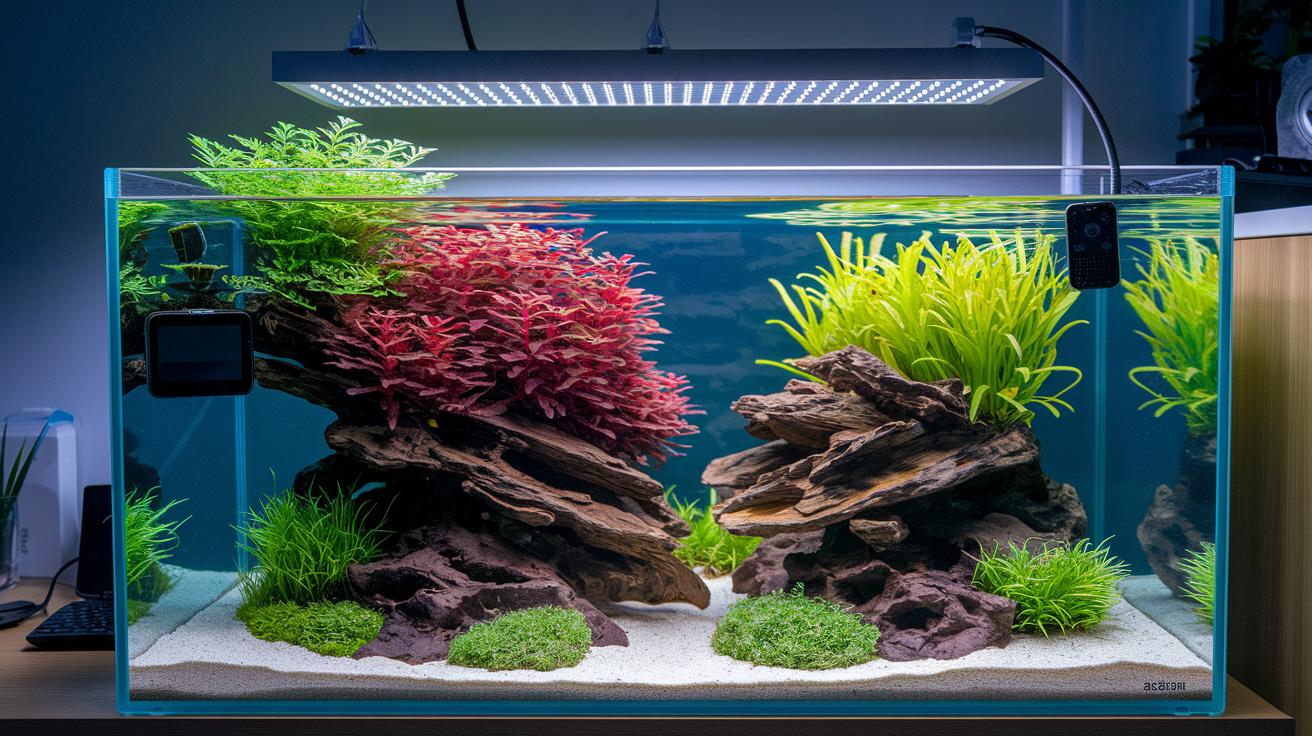
Give your tank a refreshing upgrade by adding smart automation that makes controlling the light schedule a piece of cake. With built-in controllers, you can set up your tank’s light routine easily, choosing from preset light cycles, color mixes, and smooth dimming effects. Imagine your lights gently brightening over 30 minutes every morning, just like watching the sun peek over a calm lake.
Switching to retrofit LED kits is another smart move. These kits transform old fluorescent lights into efficient, modern lighting that offers better brightness and energy savings. Picture replacing an outdated light setup with one that instantly fills your tank with vibrant colors and clarity, like swapping an old lamp for a new, sleek design that really shines.
Upgrade further with wireless control modules that let you adjust brightness, tweak color settings, and set the on/off schedule right from your smartphone. Plus, with built-in surge protection, your lights stay safe from voltage spikes, extending their lifespan. Think of it as giving your aquatic garden a flexible and reliable system that evolves with your tank’s ever-changing needs.
Spectrum and PAR Management
Using a PAR meter helps you check the light that reaches your plants. Aim for about 100 µmol·m⁻²·s⁻¹ at the substrate, but remember each plant type is unique. For example, low-light plants like Anubias do best with 25–50 µmol·m⁻²·s⁻¹, while medium-light choices such as Cryptocoryne need around 75–100 µmol·m⁻²·s⁻¹. If you have high-light species like Glossostigma, try aiming for 150–200 µmol·m⁻²·s⁻¹. Think of your PAR meter as a gentle pulse, confirming that the light in your aquatic garden is just right.
Placing dual-bar LED fixtures ensures even light across your tank. Mount them 2–4 inches above the water surface for the best beam spread and to support deep water growth.
| Plant Type | Recommended PAR (µmol·m⁻²·s⁻¹) | Suggested Duration (hrs) |
|---|---|---|
| Low-light Species | 25–50 | 8–10 |
| Medium-light Species | 75–100 | 8–10 |
| High-light Species | 150–200 | 6–8 |
Regular checks with your PAR meter keep your setup just right, ensuring your underwater garden remains healthy and vibrant.
Final Words
In the action, we explored how lighting boosts both plant growth and the visual charm of your aquarium. The post covered everything from setting the right spectrum and PAR levels to fine-tuning photoperiod strategies and cleaning routines. We shared tips on picking energy-efficient fixtures and even smart upgrades for ease. All these steps work together for maintaining aquarium lighting for a thriving planted tank. A balanced and bright setup leaves you with a serene underwater world to admire. Enjoy turning your tank into a living work of art!
FAQ
What are some signs of too much light on aquarium plants?
The signs of too much light on aquarium plants include leaf bleaching, scorched edges, and rapid algae growth, indicating the plants are receiving excessive light energy.
What is the best aquarium light to prevent algae?
The best aquarium light to prevent algae is one with adjustable intensity and a full RGB spectrum that lets you fine-tune the light to support plant growth while minimizing algae risk.
When should I turn on my aquarium light?
The optimal time to turn on your aquarium light is early in the morning, which mimics natural light levels and helps set a healthy daily cycle for your tank.
How long should aquarium lights be on to support plants and avoid algae growth?
Aquarium lights should typically run for 8 to 10 hours daily; this duration nurtures plant health while keeping algae growth in check.
What benefits does a full RGB spectrum aquarium light offer?
A full RGB spectrum aquarium light provides a balanced mix of red and blue wavelengths that are essential for photosynthesis, boosting plant growth and overall tank vitality.
How many LED watts per gallon are recommended for a planted tank?
For a planted tank, using about 0.5 to 1 LED watt per gallon is common practice, though you may adjust based on your specific plant species and tank setup.
What are the ideal lumens per gallon for a planted tank?
While lumens are less precise than PAR for plants, aiming for roughly 150 to 250 lumens per gallon with an efficient LED fixture can offer sufficient brightness for many setups.
How can I tell if my aquarium light is good for plants?
Your aquarium light is effective for plants if it shows a balanced spectrum with high PAR levels and covers key wavelengths, especially red and blue, needed for healthy growth.
What color light is best for plant growth in an aquarium?
The best light colors for aquarium plant growth are red and blue; these hues closely match the wavelengths plants use most for photosynthesis and overall vitality.