

Ever wondered if you can feed your fish a healthy meal without splashing too much cash? You might think balanced fish nutrition costs a lot, but there are smart ways to do it on a budget.
Think of it like a cheerful breakfast for your fish. High-quality pellets, protein treats, and simple plant foods come together just right to give your aquatic pals the energy they need to glide through the water happily.
Keep reading to discover clever tips that help you treat your fish well while keeping your budget afloat. Each meal can be a delightful treat that lets your fish swim with energy and joy.
Budget-Friendly Balanced Nutrition Strategies for Aquarium Fish
Feeding your fish a balanced diet is a bit like enjoying a good breakfast. Every day, offer a main meal of high-quality flakes or pellets packed with proteins, vitamins, and minerals. This daily staple not only boosts their colors but also keeps them healthy and active.
Measure out just enough of this core feed each day. Then, a couple of times a week, add a special protein treat with frozen bloodworms or brine shrimp, imagine it as sprinkling a delicious, nutrient-rich topping on your meal, much like kids who grab a protein snack before school.
Don't forget to mix in plant-based foods. A few servings of spirulina flakes, algae wafers, or even lightly cooked vegetables a couple of times each week provide the essential fiber needed to balance the diet. And once a week, a live food treat can add a bit of surprise and fun to their menu.
Keeping to consistent portions is key. When you see your fish nibbling evenly, you know you're doing it right. Regular feeding not only supports your fish's health but also helps manage waste breakdown, keeping the water as clear and calm as a quiet pond on a sunny day.
Economical Feed Options: Comparing Commercial vs Homemade Balanced Diets
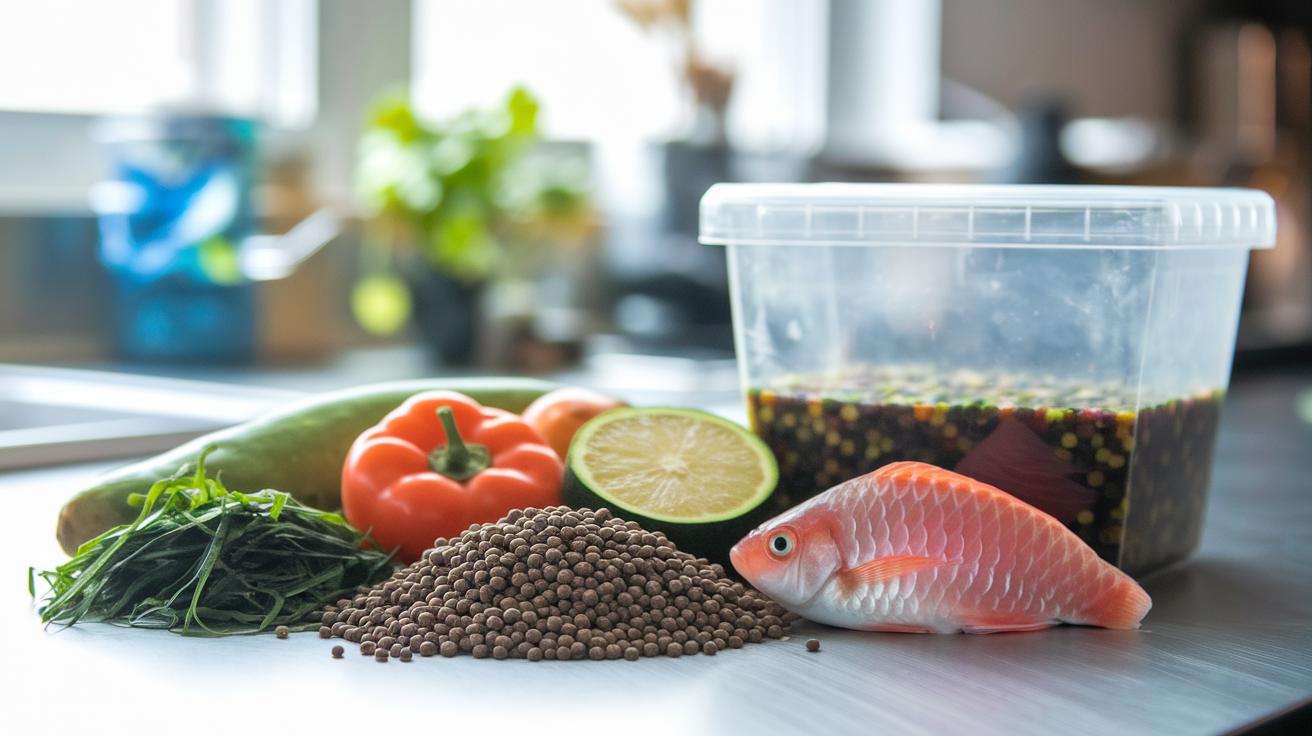
Commercial feeds like floating or sinking pellets or flakes are like ready-made treats for your fish. They give a full range of key micronutrients, much like a perfectly balanced prepackaged meal. However, these feeds usually cost about 20-50% more per pound, imagine paying extra for that convenience on your grocery run.
Homemade blends, on the other hand, let you save a significant amount of money. When you mix together fish meal, veggie purees, and algae, you can cut costs by up to 50%. It’s like cooking a healthy dinner right at home. You can fine-tune the mix to hit around 30-40% protein, 5-10% fat, and the right bit of fiber, ensuring your fish get a proper and balanced diet.
| Feed Type | Cost Impact | Main Nutrients | Ease of Use |
|---|---|---|---|
| Commercial Feeds | 20–50% higher cost per pound | Balanced proteins, vitamins, minerals | Ready-to-use |
| Homemade Blends | Saves up to 50% cost | Custom mix: 30–40% protein, 5–10% fat, fiber | Requires preparation |
Adding low-cost supplements like fish oil capsules or powdered greens can boost your homemade blend’s vitamin and mineral content, matching what you get from commercial feeds. Switching to DIY feed is a bit like trading a pricey gadget for a trusty tool, it’s simple, efficient, and keeps your wallet happy.
When you balance cost with good nutrition, you’re giving your fish just what they need while keeping expenses low. It’s a smart move for any aquarist who loves both their fish and a well-managed budget.
Efficient Ingredient Sourcing for Cost-Conscious Aquarium Fish Nutrition
Finding top-notch ingredients for your fish feed without emptying your wallet is like discovering a hidden, fresh stream in your favorite pond. Start by hunting for bulk options like fish meal, soybean meal, and spirulina powder in packages from 1 to 5 pounds. These larger packs can cut your costs by up to 30–60%, giving you plenty of supply while keeping your savings afloat.
Next, check out local co-ops or your nearby farmer’s market. They often have fresh produce and blanched veggies available at friendlier prices. You might also catch seasonal deals on items like algae wafers or bloodworms, which can drop by 20–25%. Keeping an eye out for these sales is as refreshing as catching a gentle current in your tank.
Another tip is to consider powdered ingredients whenever you can. Powdered forms not only help you save money but take up less room and resist spoilage, so your supplies stay as fresh as a mountain stream for longer.
Here are a few quick hints:
- Buy in bulk to shrink the cost per pound.
- Explore local co-ops for seasonal, fresh finds.
- Choose powdered products for a longer shelf life and less waste.
| Ingredient | Bulk Savings | Seasonal Discount |
|---|---|---|
| Fish Meal | 30–60% | Varies |
| Algae Wafers | N/A | 20–25% |
| Spirulina Powder | 30–60% | Varies |
DIY Thrifty Meal Recipes for Balanced Aquarium Fish Diets

When you want to treat your fish to a healthy, budget-friendly meal, try making your own mix with just a few simple ingredients. Start with a blend of 60% fish meal, 20% spirulina (a kind of blue-green algae that’s full of nutrients), 10% pea protein, 5% krill powder, and 5% vitamin and mineral premix. This mix gives your fish a perfect balance of protein, vitamins, and minerals, all without breaking the bank. Ever wonder how saving money can feel as refreshing as watching a gentle ripple across your favorite pond?
Begin by mixing all the ingredients until you get a fine, even powder, imagine the soft murmur of water over smooth stones. Then, scoop the mix into silicone molds to create small, bite-sized treats that your fish will love. You can either freeze-dry these treats or pop them in the refrigerator where they’ll stay fresh for up to two weeks. It’s a neat way to keep your feed available without making extra trips to the store.
If you feel like spicing up the menu, try a monthly rotation. One idea is to whip up a blend using 70% staple flakes, 20% a veggie mix (like spinach and zucchini), and 10% live worms for a delightful surprise. Plus, tossing in an algae supplement each week adds that extra nutritional boost.
Quick pointers:
- Blend ingredients until smooth.
- Form small portions using silicone molds.
- Refrigerate or freeze-dry for storage.
- Rotate with staple flakes, veggies, and live-worm treats monthly.
- Use one weekly algae supplement for extra nutrition.
Following these steps helps ensure your fish enjoy a balanced diet while keeping your costs low. Isn't it amazing how a little creativity underwater can lead to big benefits?
Frugal Feeding Schedules and Portion Control to Maximize Feed Efficiency
Matching your feeding schedule to your fish’s needs not only saves money but also keeps your tank clean. Fast-growing fish like tilapia and trout feel great with one or two meals a day, while slower-eaters such as goldfish and koi are happier with just one feeding. And remember, scooping away any uneaten food after about 10–15 minutes stops extra ammonia from building up in the water. It’s a bit like giving a quick snack and then tidying up afterward.
As the seasons change, your routine should too. When summer heats up the water, bump up the food by 10–20% to support your fish’s busy metabolism. In the cooler months, cutting back by 20–30% helps prevent overfeeding when their digestion slows down. A handy tip is to use a timed feeder or small portioning device, they keep every meal just right and help reduce waste.
Key tips:
- Adjust feeding times to match each species’ needs.
- Quickly remove any leftover food.
- Change portions based on seasonal water temperatures.
These simple steps boost feed efficiency, protect your aquatic friends, and keep your costs low.
Savings-Driven Nutrient Fortification for Balanced Aquarium Fish Nutrition

Boosting your fish food’s nutrient value can be simple and budget-friendly. Instead of spending a fortune, try mixing in low-cost additives that work like a little splash of extra care. For instance, crushing fish oil capsules adds omega-3 fatty acids, which help your fish feel vibrant and strong, just like adding a hint of lemon to refresh your water.
Another trick is to stir in spirulina, a natural pigment that brightens your fish’s colors while boosting their overall health. A mix of vitamin C and biotin powders is an easy way to help support their immunity and energy. A neat tip is to blend about 0.5% of the premix into every batch of feed and switch up these supplements weekly. This keeps the diet balanced and prevents any one nutrient from overwhelming your aquatic friends.
For an extra boost, consider bulk mineral packs from agricultural suppliers. Buying calcium, magnesium, and other trace minerals in bulk can save money while ensuring your fish get what they need for strong scales and smooth, buoyant swimming.
| Tip | Benefit |
|---|---|
| Crushed fish oil capsules | Boosts omega-3 for healthy growth |
| Spirulina | Adds natural color and essential pigments |
| Vitamin C & biotin premixes | Enhances immunity and energy |
Every additive is like a secret ingredient in your favorite recipe. These budget-friendly fortification techniques help you create a nutrient-rich feed that keeps your fish lively and your aquarium thriving, all while keeping costs in check.
Final Words
In the action, the post showed how to combine quality feed components, homemade mixes, and smart feeding schedules to keep your fish healthy. It covered budget-friendly options, efficient ingredient sourcing, and step-by-step DIY recipes that make meal planning a breeze. The ideas help create a cozy, balanced aquatic habitat while keeping expenses low. Embrace these cost-effective strategies for balanced aquarium fish nutrition and enjoy the calm, clear waters of your very own underwater haven.
FAQ
Q: What are cost effective strategies for balanced aquarium fish nutrition 2022?
A: The cost effective strategies for balanced aquarium fish nutrition emphasize mixing daily staple feeds with protein treats and plant-based options. This blend delivers essential nutrients while keeping expenses low and fish health in focus.
Q: What can I feed my fish and small goldfish at home if I run out of food?
A: The options for feeding fish when standard food runs low include using blanched vegetables, homemade fish meal mixtures, and frozen protein treats like bloodworms. These backups offer temporary nutrition until you restock.
Q: What is the best time to feed fish and how many times should I feed them in an aquarium?
A: The best time to feed fish is in the morning when they are most active, with fast feeders benefiting from two feedings while slower feeders generally require only one day’s meal.
Q: What do tropical fish eat in the wild?
A: The natural diet of tropical fish in the wild includes small insects, plant matter, and algae. This mix implies that providing a diverse diet in your aquarium can help mimic their optimal nutritional balance.
Q: How can I create a DIY balanced diet for my aquarium fish on a budget?
A: The DIY approach for a balanced aquarium fish diet involves blending fish meal, spirulina, pea protein, and a vitamin mix. Using bulk ingredients and rotating homemade batches helps maintain nutrition while cutting costs.