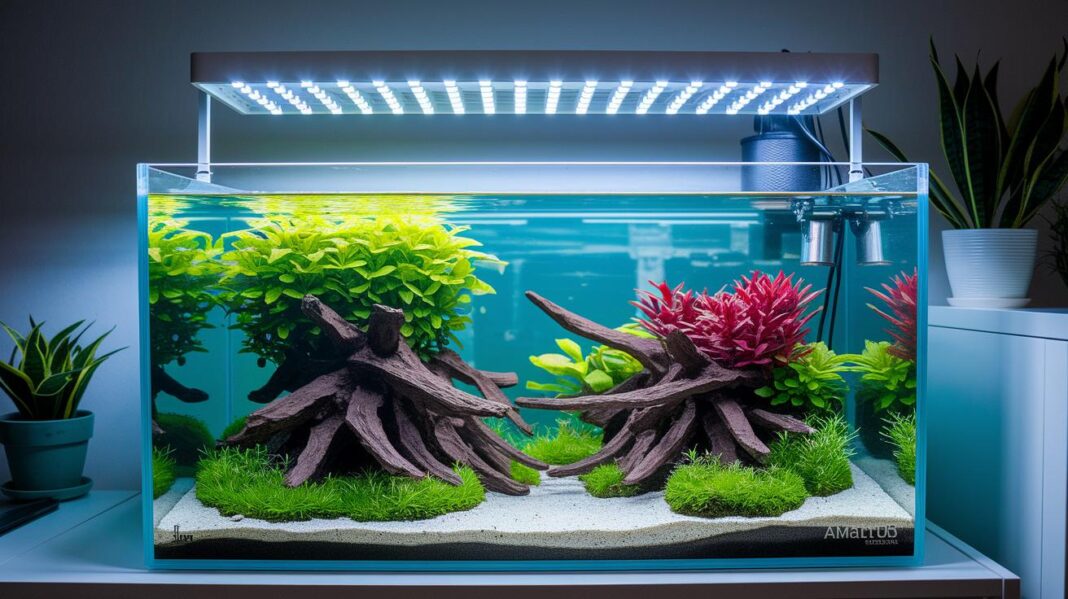

Ever thought that your aquarium light might be secretly holding your plants back? Some fish friends say picking the right bulb is just as vital as keeping your water clean.
Picture it like seasoning your favorite meal, you need just the right amount to make everything pop. In this piece, we dive into how matching the perfect brightness and color can give your plants a boost and turn your tank into a peaceful underwater haven.
We share easy, step-by-step tips to help your little aquatic garden flourish, so you can enjoy a tank that feels as calm and inviting as a quiet pond.
best lighting for aquarium plants: radiant glow
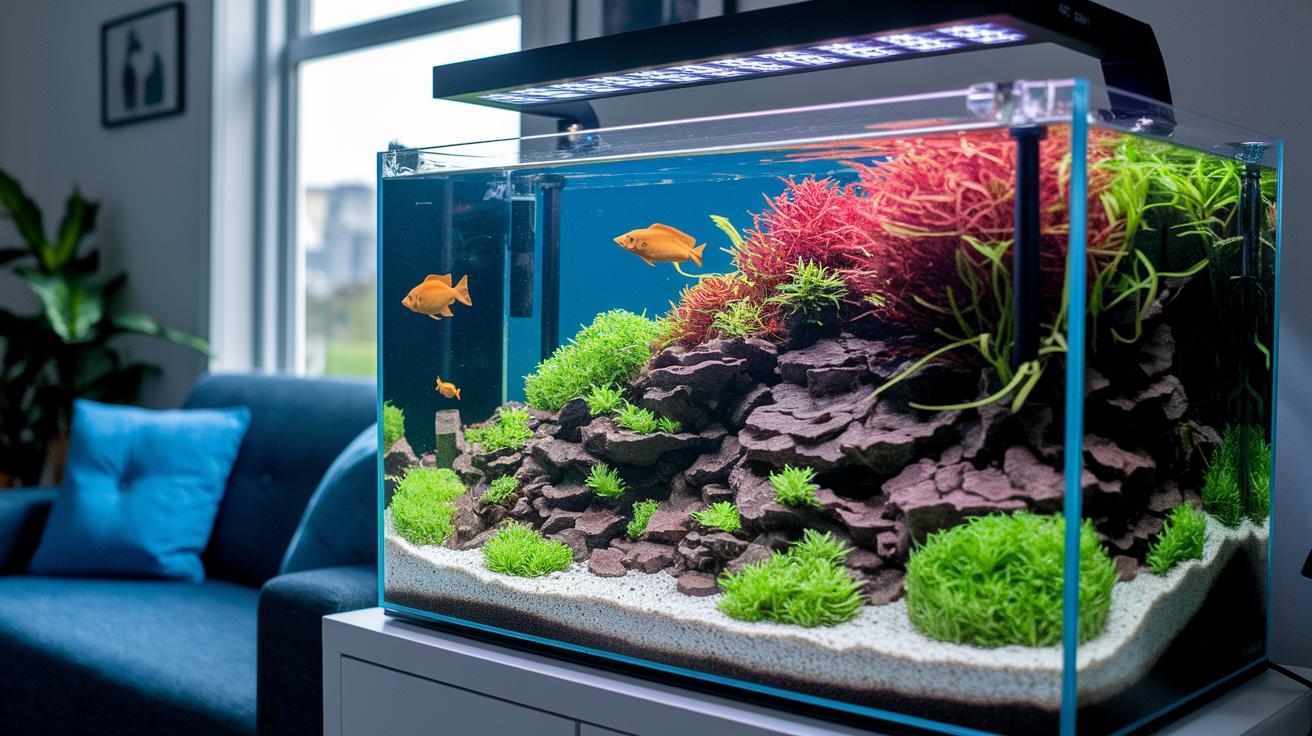
When setting up your planted aquarium, the type of light you choose is super important. Warmer lights around 2700K give off a soft, yellow glow that low-light plants love. On the other hand, cooler lights around 10,000K offer a bluish tint that makes colors stand out. It’s a bit like choosing the right water temperature for your fish, matching the light to your plants helps them grow naturally and keeps your tank looking as calm as a quiet pond.
Don’t forget about the brightness, too. Hardy plants like Anubias and Cryptocoryne are happy with low-intensity lighting, but stem plants need a bit more light to thrive. For faster-growing varieties like rosette plants, high-intensity fixtures work well, though you might need to add extra CO₂ to keep algae under control. Usually, most lights shine their best about 1 foot below the fixture, and if you have a larger tank, wide-beam LED options spread light at a 120° angle to cover more space.
Here are a few lighting options that might suit your setup:
- Week Aqua P900 – This light uses UV diodes and lets you program its spectrum and timer settings; it’s ideal for tanks needing about 1 foot of coverage.
- Chihiros VIVID2 – With a narrow-band RGB design, this light boosts color saturation; it’s perfect for focused coverage over 1 foot.
- ADA Solar RGB – Offering a full spectrum output, it caters to different plant needs across a similar coverage area.
Choosing the right light really depends on your tank size and the plants you’re growing. For an aquarium that measures around 18–24 inches, you might consider using multiple lights or a wide-beam fixture to ensure everything gets even illumination. Matching both the color and brightness to your plants’ needs is the secret to a thriving, balanced display.
Getting the right mix of light spectrum, intensity, and spread is key to healthy, happy plants. It’s like creating a miniature underwater world where every gentle glow and beam of light adds to the peaceful vibe of your aquarium.
Comparing LED and Fluorescent Lighting Options for Aquatic Plants
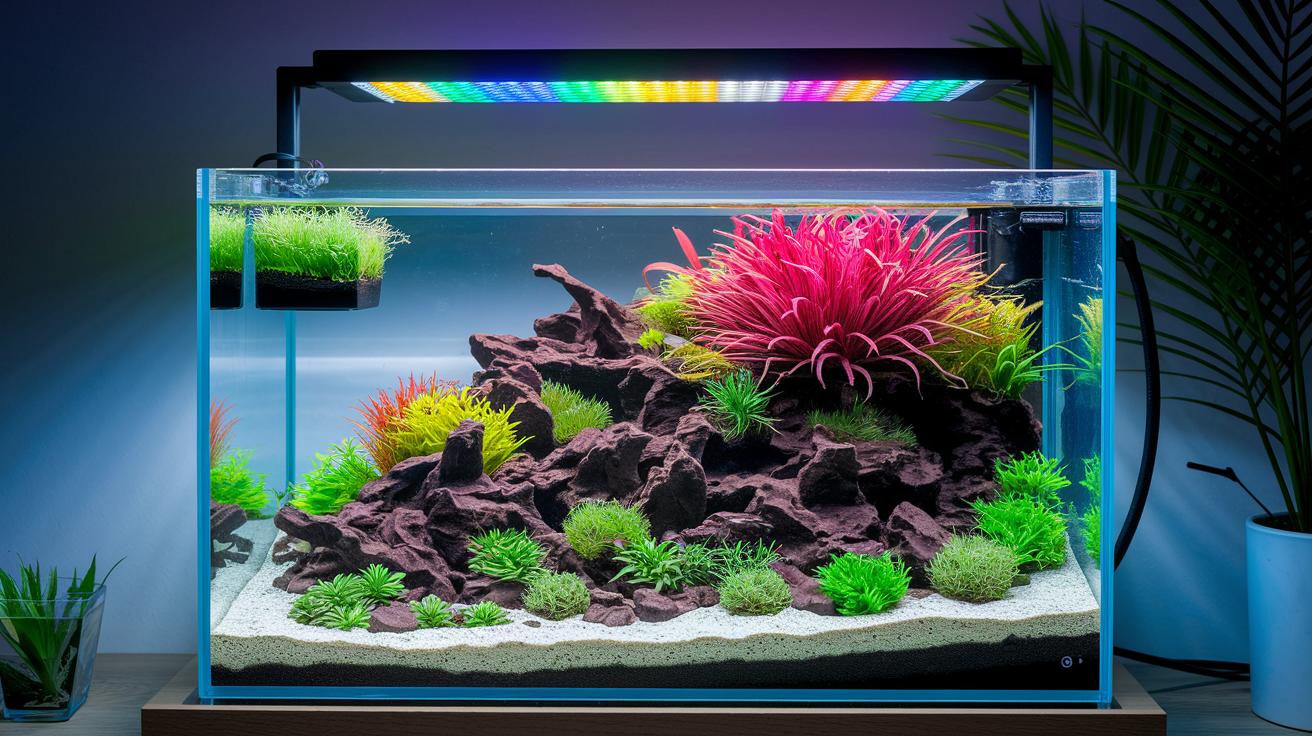
When it comes to lighting up your aquatic plants, many fish lovers choose LED fixtures because they show off colors beautifully. Regular lamps might help plants grow, but they often miss the chance to reveal the true shades in your tank. LED setups with RGB diodes create focused bursts that make the colors pop, while white diodes provide a smooth, full spectrum, almost like watching sunlight dance through water. This can really bring out those soft, hidden hints in your plant hues.
LED lights offer a bright display and can shine for more than 50,000 hours. They also use 30-50% less energy compared to regular fluorescent bulbs, which usually last around 10,000 hours. There’s also the T5 HO bulbs option, which lasts about 20,000 hours, a happy middle ground. Balancing energy use, color brilliance, and bulb life is key to picking the perfect light for your tank.
| Feature | LED Fixtures | Fluorescent Bulbs | T5 HO Bulbs |
|---|---|---|---|
| Color Spectrum | Narrow-band RGB with high color saturation | Continuous but less accurate color rendition | Balanced full spectrum output |
| Energy Consumption | Low, saves 30–50% power | Relatively high | Moderate efficiency |
| Lifespan | Over 50,000 hours | Around 10,000 hours | About 20,000 hours |
| Upfront Cost | Typically higher | Lower initial cost | Mid-range price |
| Light Spread | Ranging from focused to wide-beam (up to 120°) | Usually around a 1-foot spread | Similar to fluorescent coverage |
Every lighting option has its own perks. If you love making those vibrant colors shine, LED fixtures are a great pick. For those on a tighter budget, fluorescent bulbs can do the job. And if you want a bit of both worlds, T5 HO bulbs offer a balanced glow suitable for many types of tanks and plants.
Advanced Spectrum and Intensity Guidelines for Planted Aquariums
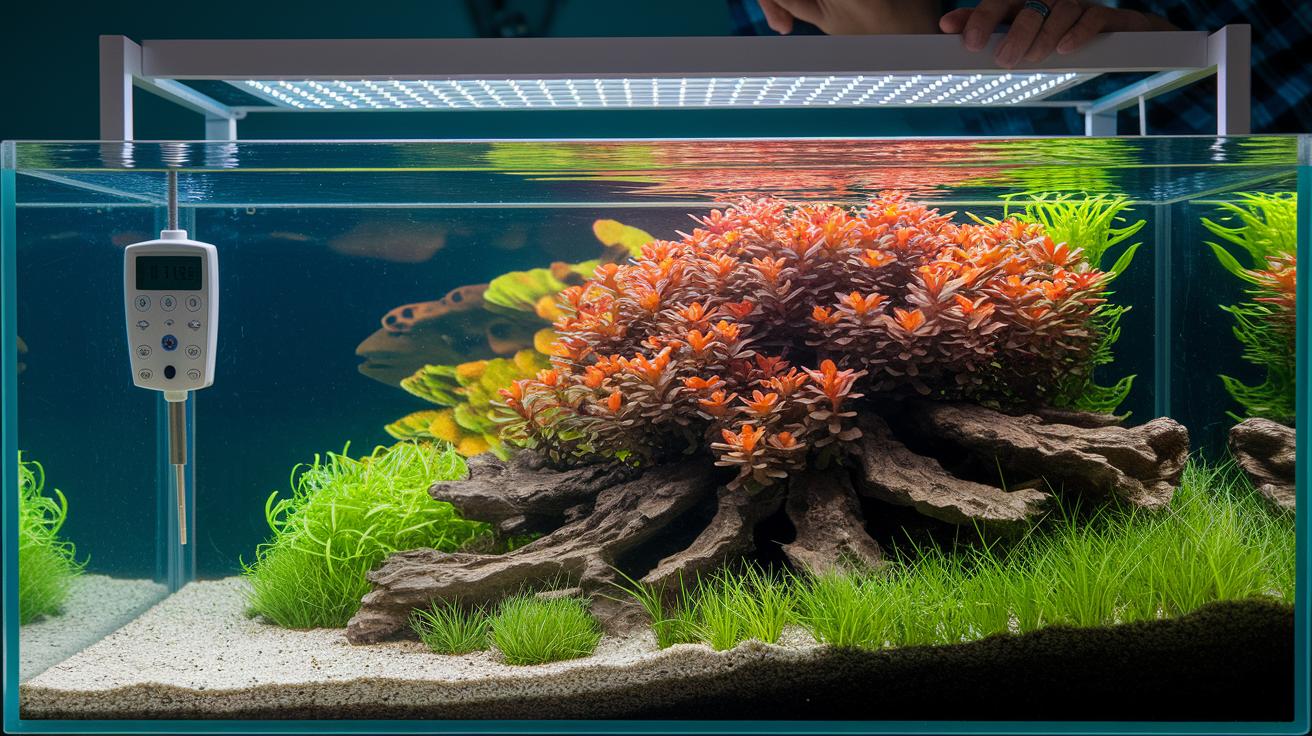
Measuring Light Output
When you're checking the light in your aquarium, it's good to know the difference between PAR and lux. PAR tells you the light that plants can actually use for photosynthesis, much like knowing if your fish tank is at the right temperature before adding your fish.
Light meters are really useful tools. For the best reading, place your meter right where your plants catch the light, often directly under the light fixture. Using a meter that measures PAR instead of lux is like putting a thermometer where the fish love to swim; it shows you exactly how well the light is working for your plants.
Matching Light to Plant Needs
Every plant in your tank has its own favorite light style. Hardy plants like Anubias and Java fern do well with softer light, while stem plants need a bit more without being overwhelmed. Fast-growing, rosette plants thrive with bright, intense light. If you choose strong light, adding a bit of extra CO₂ (above 50 μmol·m–2·s–1) can help keep unwanted algae at bay, like giving your aquarium a little extra boost.
Don't forget about the light spectrum. Narrow-band RGB lights focus on one color to create vibrant shades, while full-spectrum white LEDs deliver a warm, even mix of light. Picking the right mix is a bit like tuning a musical instrument, where every setting comes together to create a harmonious underwater world.
Top-Rated LED Grow Light Fixtures for Planted Aquariums
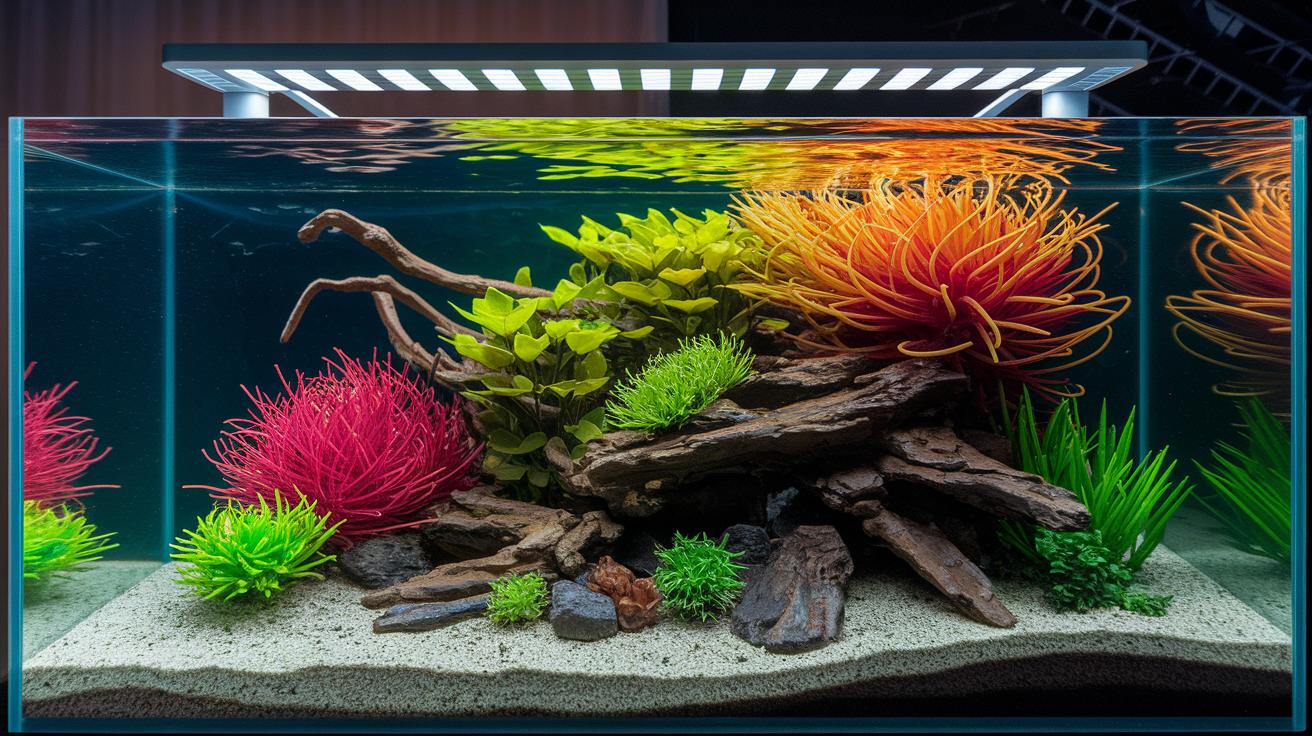
ONF Flat One
This light has a slim, modern look and spreads its glow evenly over your tank. In some setups, it even beams out over a wide 120° angle, giving your plants plenty of light to flourish. You can program its settings to change the light colors and timing, kind of like adjusting the brightness on your favorite screen for just the right look. Its mid-range price makes it a smart pick for those who want both style and performance.
Twinstar S
Perfect for smaller or more focused aquarium setups, the Twinstar S gives you accurate control over its light spectrum and timing. It fits snugly into compact tanks, making it an excellent budget-friendly option. Think of it like a tiny, trusty gadget loaded with smart features that bring life to your aquatic scene.
Both the ONF Flat One and Twinstar S offer fresh, modern choices for planted aquariums. With their unique programmable features and thoughtful designs, they give you the flexibility to create a tank setup that suits your space perfectly.
Energy Efficiency and Lifespan: Maximizing Value in Aquarium Lighting
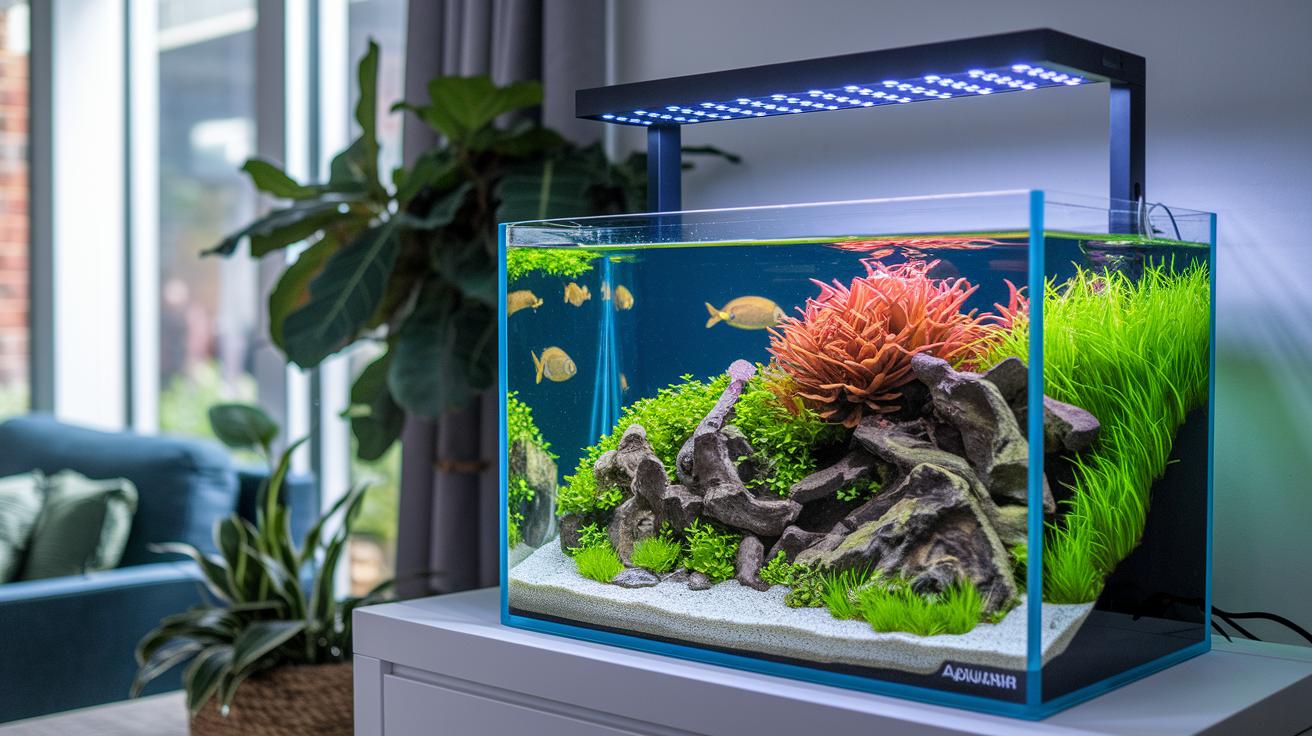
LED lights use 30 to 50 percent less power than old fluorescent ones. This saves you money on the electric bill and helps your tank plants grow strong, kind of like picking a smart heater when it’s chilly outside.
LED modules shine for over 50,000 hours. In comparison, traditional fluorescent bulbs last only about 10,000 hours, and T5 HO bulbs go for roughly 20,000 hours. Plus, you can replace just the LED part if needed, which makes keeping your display in top shape super easy.
Many LED systems come with built-in dimmers and timers. This lets you adjust the brightness to match your mood, much like setting the perfect ambiance in your living room.
Installation and Maintenance Tips for Aquarium Lighting Systems
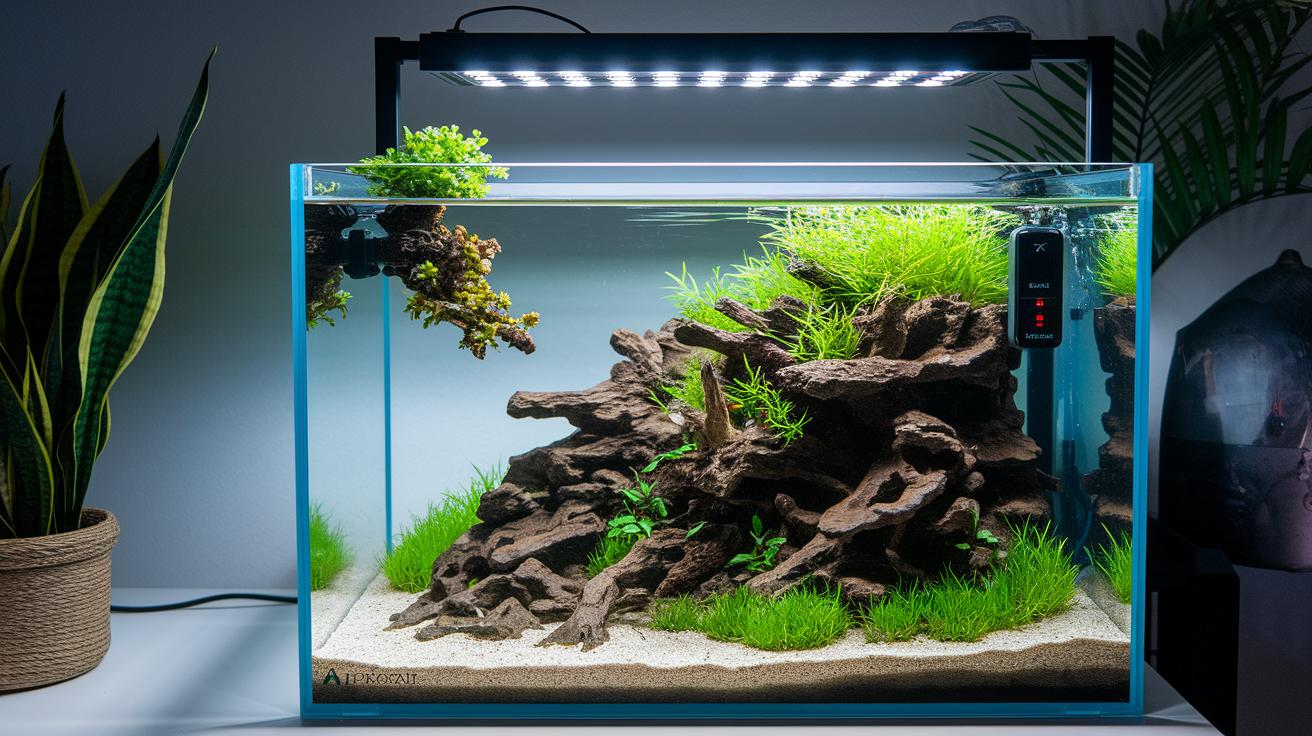
Timing and Scheduling Setup
Setting up your light timer is a lot like planning your day. Most LED lights in aquariums have a built-in timer that lets you choose an 8- to 10-hour light period. This gives your plants enough sunshine to grow strong without overdoing it, much like feeding your fish the perfect amount of food at the right time. Fun fact: a well-timed light cycle can boost plant growth just as a regular feeding schedule keeps your fish happy.
Tweaking the schedule matters too. If your light covers about a foot right under it and your tank is around 18 to 24 inches tall, you might need extra lights or a wider beam to spread the glow evenly. Adjusting the timer lets you dial in the brightness for every part of your tank, keeping your underwater world balanced throughout the day.
Routine Maintenance Practices
Regular upkeep makes all the difference. Cleaning the lens every week is a small task that keeps your light bright and clear for your plants. Think of it like cleaning a window to let the sunshine in, a quick rinse each week stops any buildup that might dim the light.
It also helps to check that your light is hanging just right, ideally 2 to 4 inches above the water. Keep an eye on your lighting modules and plan to replace them once their brightness drops by 15 to 20% or after they've been used for their rated hours. Taking care of these little details means your aquarium lighting will keep shining reliably for a long time.
Final Words
In the action, we explored key elements from color spectrum and intensity to comparing LED and fluorescent options that shape a thriving tank. We broke down how choosing fittings and scheduling routine maintenance contributes to a healthier aquatic space. Tips on matching light to plant needs and selecting top-rated grow light fixtures were shared with care. Every careful decision can spark an underwater home that gleams with life, powered by the best lighting for aquarium plants. Enjoy the process and watch your aquatic world transform.
FAQ
What is the best lighting for aquarium plants?
The best lighting for aquarium plants means using a full-spectrum LED fixture that offers adjustable settings to support healthy growth and mimic natural sunlight, ideal for various plant types.
Is LED lighting enough for aquarium plants?
LED lighting is enough for aquarium plants because it provides the specific wavelengths needed for photosynthesis while running efficiently and lasting longer than older lighting types.
What color light is best for aquarium plants?
The best color light for aquarium plants combines cool blue and warm tones, mimicking natural daylight and supporting optimal plant growth while keeping algae in check.
What are some top LED fixtures for planted tanks?
Top LED fixtures for planted tanks include models like Chihiros LED Light WRGB II Pro and Hygger Aquarium Light, offering precise spectrum control and energy efficiency for a thriving aquatic garden.
How does lighting affect algae prevention in aquariums?
Proper aquarium lighting helps prevent algae by delivering balanced intensity and spectrum so plants can absorb light efficiently, reducing excess energy that fuels algae blooms.
What is the best LED light setting for plant growth?
The best LED light setting for plant growth typically provides a mix of full-spectrum white light along with adjustable RGB options, enabling you to fine-tune brightness and color balance for healthy plant development.
What should beginners look for in aquarium lighting?
Beginners should choose aquarium lighting that offers simple controls, a balanced spectrum, and energy efficiency, making it easier to support plant health without overcomplicating their tank setup.
Can you explain more about Chihiros aquarium lighting options?
Chihiros offers various lighting models like the WRGB II Slim and WRGB II Shade, each designed with precise spectrum control and suitable coverage to match different tank sizes and plant requirements.
What is Seaoura Aquarium Light?
Seaoura Aquarium Light is a robust LED option known for its balanced spectrum and ease of use, making it a practical choice to support plant growth while reducing the potential for algae in your tank.