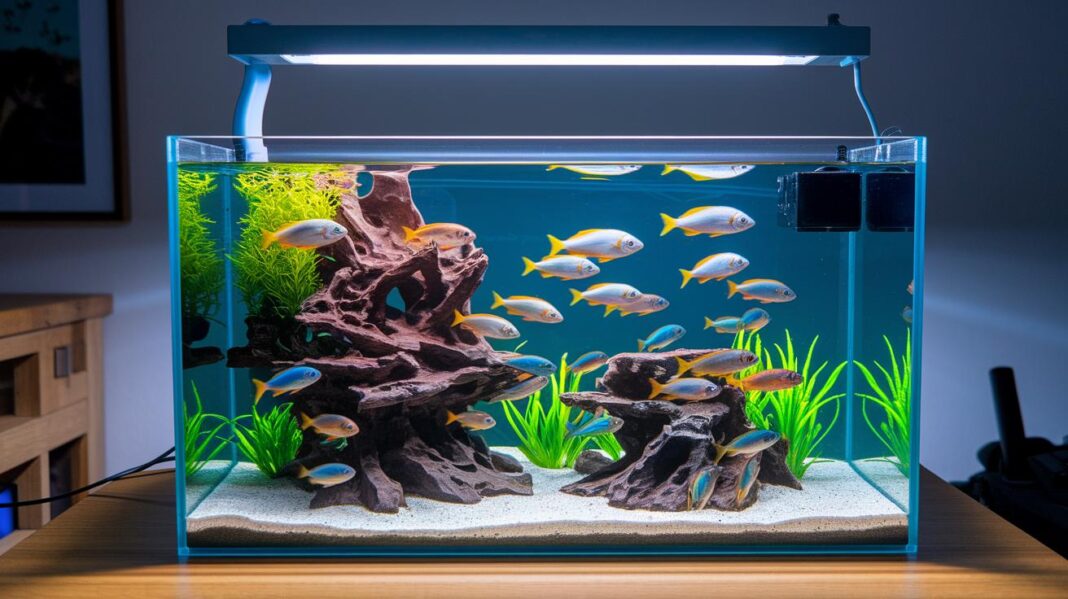

Have you ever wondered if your aquarium light helps your fish and plants truly shine or if it might be keeping your tank from its full potential? Picture your underwater home lighting up like a hidden oasis with the right lamp. Our guide walks you through the benefits of different lights, from LED to fluorescent, explained in a simple way so you can decide what works best for your aquatic setup. Dive in and see how swapping your light can bring out your tank's natural glow.
Fundamental Aquarium Lighting Options and Benefits
Aquarium lighting plays a big role in showing off the underwater world and keeping plants and fish healthy. The right lamp makes those vibrant colors pop and creates a cozy home for your aquatic pets. For freshwater tanks, a lamp around 6,500 Kelvin works like natural daylight, giving you clear water without sparking unwanted algae. Marine tanks do best with lights that range from 10,000 to 15,000 Kelvin, blending deep blues and bright whites to support corals and marine life.
Modern full-spectrum LED lights are really making waves. Many of these fixtures have WRGB diodes, letting you mix colors and set a mood that fits your tank’s vibe. There are also simpler options with 6,500K broad-spectrum LEDs that create a uniform glow. For a balanced setup, aim for about 10-20 lumens per liter, especially if you keep fish and easy-care plants like anubias or moss.
A fun fact to ponder: "A well-lit aquarium can be as mesmerizing as a natural reef, with each light beam echoing the soft shimmer of a water stream." Running your lights for 8-10 hours a day, ideally with timers, helps create a steady rhythm that benefits both your aquatic buddies and lush plants.
Comparative Breakdown of LED, Fluorescent, and Metal Halide Aquarium Lighting

LED Lighting Systems
Think of full-spectrum LED lights as the gentle glow that brings your fish tank to life. These lights shine bright and last a long time, up to 50,000 hours before their brightness dips to about 70%. They run cool and use only 0.5–1 watt per gallon of water. Plus, you can mix white, red, green, and blue light to set just the right mood, much like adding a touch of sunlight to your underwater scene. And if something goes wrong, it’s usually the transformer, not the LED bulbs themselves.
Fluorescent (T5) Fixtures
T5 fluorescent lights are like the comforting, steady beat of nature. They give off a moderate amount of light and warmth, making them perfect for tanks that don’t need super bright lighting. With a bulb life of about 10,000 to 12,000 hours, these fixtures use roughly 0.8–1 watt per gallon. Picture your planted tank bathed in a soft, even glow that highlights every leaf and fin without turning up the heat too much.
Metal Halide Units
Metal halide lights are for those moments when you really want to make a splash. These lights offer a strong, deep beam that reaches all the way to the back of your tank, perfect for tanks needing intense illumination. They run a bit hotter and use more energy, about 1.5–2 watts per gallon, with a shorter life span of around 10,000 hours. Imagine your aquarium lit up like a stage, where every corner bursts with brilliant colors.
| System Type | Typical PAR (µmol/m²/s) | Wattage per Gallon | Lifespan | Relative Energy Use |
|---|---|---|---|---|
| LED | Varies (customizable) | 0.5–1 W/gal | 50,000 hrs | Low |
| T5 Fluorescent | Moderate | 0.8–1 W/gal | 10,000–12,000 hrs | Moderate |
| Metal Halide | High | 1.5–2 W/gal | 10,000 hrs | High |
Selecting Aquarium Lighting by Spectrum, Kelvin, and PAR
When it comes to setting up your tank, matching the light’s color temperature to your aquarium’s needs is like choosing the perfect background for an underwater picture. For freshwater aquariums, aiming for a range of 5,500 to 6,500 Kelvin gives you that friendly, natural daylight feel while keeping algae at bay. Reef tanks, on the other hand, enjoy a warmer glow, generally between 9,000 and 20,000 Kelvin, with soft corals shining best at around 9,000 to 10,000 K, and a boost to about 14,000 K to light up the deeper parts of your aquatic world.
Understanding the different parts of the light spectrum is key. Blue light is like a magic spark for coral photosynthesis, while red lights help the plants in your tank show off their true colors. Green light ties everything together, offering a balanced, natural look. Think of your lighting system as a painter’s palette; every shade plays its part in creating a vibrant underwater scene. Ever imagine your plants basking in a gentle morning glow, as soft and inviting as the first light of day?
It also helps to know how light is measured. Lumens tell you how much visible light is out there, while PAR (Photosynthetically Active Radiation) shows you how much of that light your corals and plants can really use for growth. Watts, on the other hand, indicate how much power your light consumes. Balancing these factors is a bit like setting up your tank’s stage, ensuring both the look and the lively stars inside have exactly what they need.
Always keep in mind your tank’s size and the type of life calling it home when fine-tuning these settings. Using your light’s specs to create a balanced environment allows your aquatic friends and your underwater display to truly shine.
Managing Aquarium Photoperiods and Control Systems
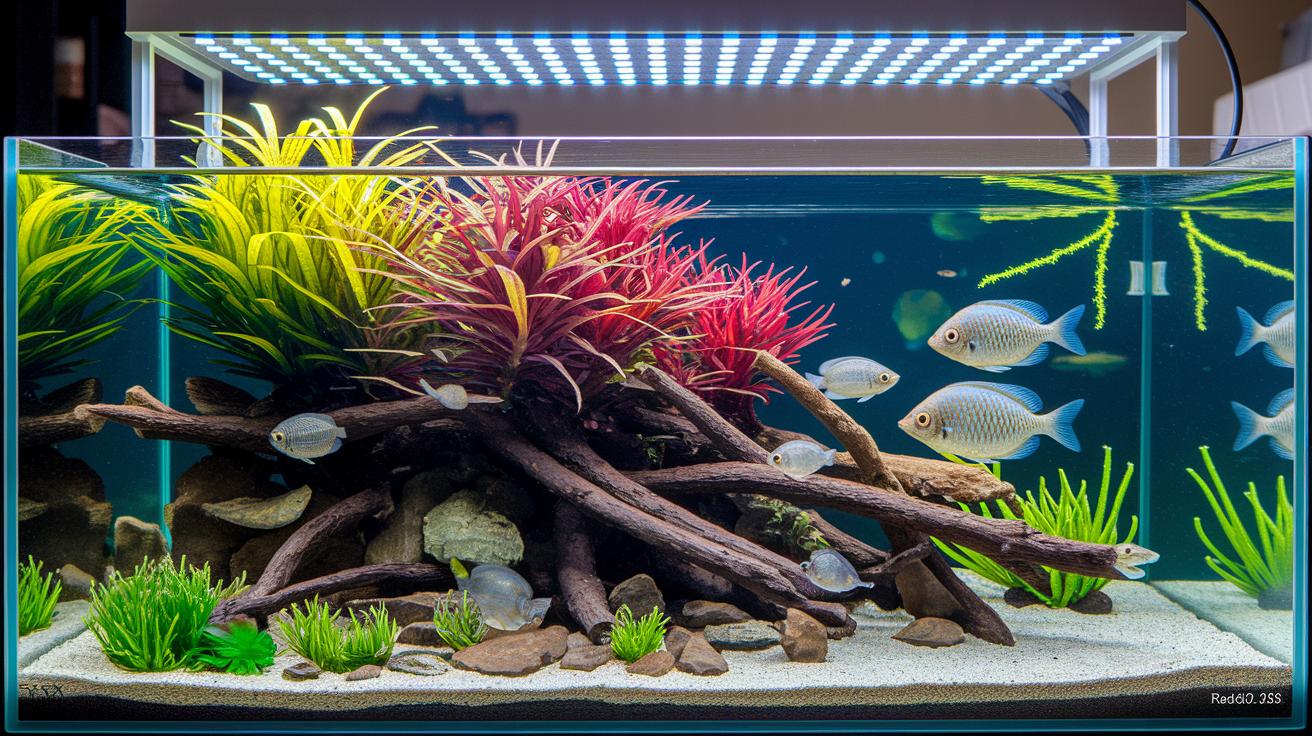
Keeping a regular lighting schedule works wonders for your aquarium. It helps plants grow strong and fish stay happy. Try running your lights for 8 to 10 hours a day, or go with a 12-hour on, 12-hour off setup that feels natural. This steady rhythm keeps algae under control and creates a calm home for your underwater friends.
Mechanical Timers
Mechanical timers are like a steady drummer in your tank. They turn your lights on and off at the right moments, giving your fish a predictable routine. For example, setting your timer for 8 hours of light prevents sudden changes that could stress your fish, much like the gentle tick of a clock in a quiet room.
Programmable LED Controls
Programmable LED controls bring a smart twist to your aquarium lighting. These advanced systems let you adjust brightness gradually, just like a smooth sunrise or sunset. They include features like dimmer curves and gradual ramp-up and ramp-down settings that even mimic overcast days. This clever setup not only helps your plants thrive but also cuts down on algae outbreaks, giving you both energy savings and peace of mind.
Installation and DIY Approaches for Aquarium Lighting Options
Choosing the perfect way to mount your aquarium lights is like finding the best spot for your favorite pond. Suspended fixtures let you glide through water changes and plant trims easily. They offer flexible placement and put you in control of the maintenance. Sometimes, you might even want to add a glare deflector so you don’t get blinded by a direct beam. Meanwhile, top-mounted lights sit on the tank's surface and help keep glare away, even if they sometimes block your access when you’re trimming plants.
First, take your time to remove any old bulbs and ballasts gently. Then, attach your shiny new LED modules using the brackets that came with your light. Always remember to seal any connections well to keep water out and protect those important electrical parts.
Safety is key during these projects. Always use waterproof connectors and secure every piece of hardware tightly. Try to keep a gap of about 2 to 6 inches above the water line to prevent any splashes from reaching the electrical bits.
Here are a few simple steps to guide you:
| Step | Action |
|---|---|
| 1 | Carefully remove old bulbs and ballasts. |
| 2 | Attach the LED modules securely with the provided brackets. |
| 3 | Seal all connections against moisture. |
| 4 | Check each fitting for a stable setup. |
Imagine your setup as a dance of light and water: every connection is double-checked for waterproofing, and your LED module floats perfectly above the rippling water. Taking these careful steps not only brightens your aquarium but also makes maintenance feel like a breeze, letting you enjoy your underwater world even more.
Energy Efficiency, Maintenance, and Longevity of Aquarium Lighting Options
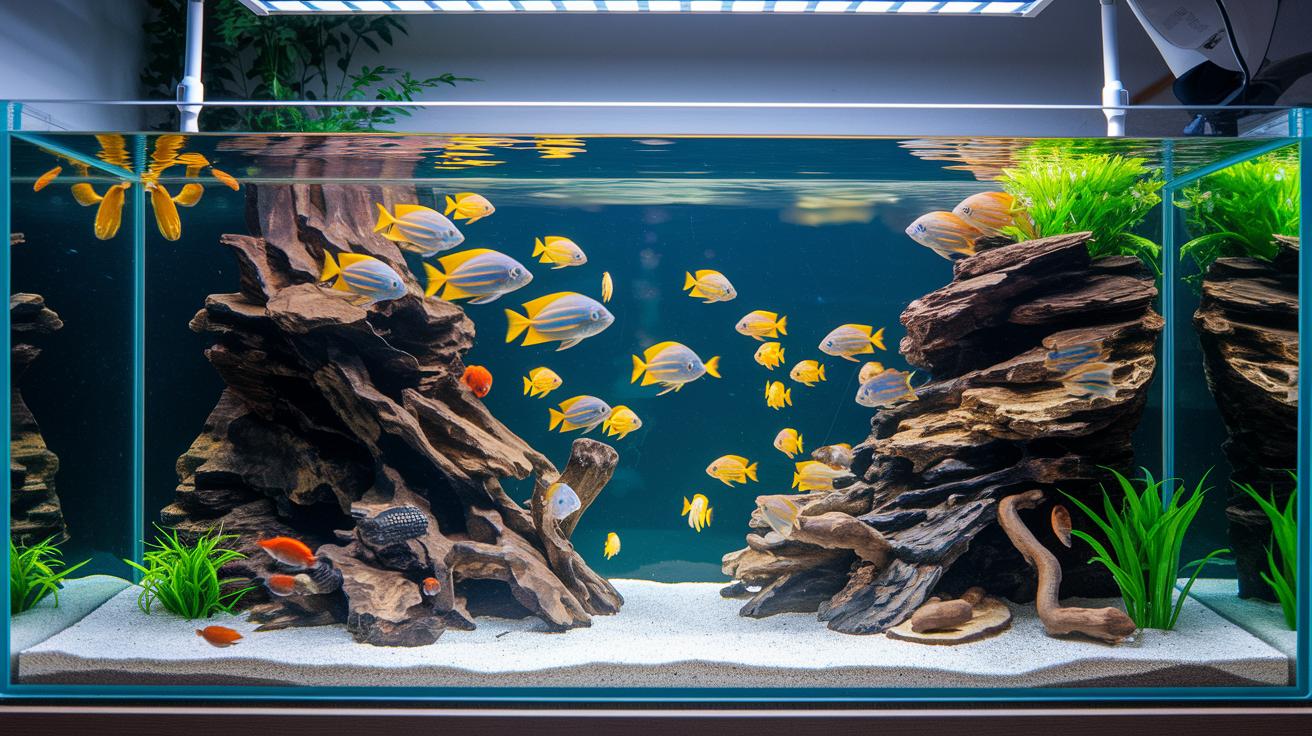
LED lights work like magic in your aquarium, using much less energy than other options. They sip power, about 30–50% less than fluorescent bulbs and 60–70% less than metal halide lights, while still lighting up your underwater world beautifully. This means you can enjoy a lively, glowing tank without worrying about a big electric bill.
Keeping LED systems in top shape is a breeze. A quick monthly lens clean helps get rid of any water spots or dust that might dull the lights. Plus, a once-a-year PAR test makes sure your aquatic plants and fish get just the right amount of light. In comparison, fluorescent tubes need a new one every 6–12 months, which can be both a hassle and a cost.
One of the best parts about LEDs is their long life underwater. They shine brightly for around 50,000 hours before their brightness drops to 70%, giving you years of reliable performance. Often, the only issues come from transformers or water seepage, not the LEDs themselves. By following the manufacturer’s advice on bulb changes and regular upkeep, you keep your tank glowing and avoid unexpected costs.
Final Words
In the action, this article broke down the main lighting types, from full-spectrum LEDs to T5 and metal halide fixtures, and how each adds charm and care to your tank. It explained color temperatures and photoperiod management while giving a clear look at setup and maintenance tips. We shared easy steps for a streamlined installation that helps your plants and fish thrive. Enjoy turning your aquarium into a radiant display. Check out our comprehensive guide to aquarium lighting options for more insights and support in keeping your underwater world flourishing.
FAQ
Planted aquarium lighting guide
The planted aquarium lighting guide explains how to choose the right light based on spectrum, intensity, and photoperiod to support healthy aquatic plant growth.
How many LED watts per gallon planted tank?
The rule for LED watts per gallon in a planted tank is about 0.5 to 1 watt per gallon, provided the LEDs are full-spectrum and efficient for balanced plant growth.
What is the best LED aquarium lighting for plants?
The best LED aquarium lighting for plants offers a full-spectrum output, often with adjustable WRGB diodes, to promote healthy photosynthesis and showcase the tank’s vibrant colors.
What type of aquarium light works best for plants?
An aquarium light for plants should deliver full-spectrum illumination, ideally around 6,500K for freshwater setups, to support natural plant development and minimize unwanted algae.
How does a planted aquarium light calculator work?
A planted aquarium light calculator estimates the correct mix of lumens, watts, and spectrum based on tank size and plant needs, ensuring sufficient light levels for robust growth.
What does blue light in a fish tank do?
Blue light in a fish tank enhances the natural look of aquatic life and can promote coral fluorescence, while also offering a soothing, natural underwater visual experience.
What color light is best for aquarium plants?
The best color light for aquarium plants is a full-spectrum white, typically around 6,500K for freshwater tanks, as it mimics natural daylight and supports efficient plant photosynthesis.
How many lumens per gallon are needed for a planted tank?
Planted tanks usually require about 10–20 lumens per liter, so adjusting the light intensity based on specific tank dimensions is key to meeting your plants’ light demands.
What are the different types of aquarium lighting?
Aquarium lighting options include LEDs, T5 fluorescent, and metal halide units, each offering distinct benefits in terms of PAR output, energy use, and heat production.
What is the best light setting for an aquarium?
The best light setting varies with tank type; for planted tanks, full-spectrum lighting with a balanced photoperiod—typically 8–10 hours daily—ensures optimal growth and visual appeal.
Which is better: T5 or LED aquarium lighting?
T5 lights provide a moderate PAR output with some heat, while LEDs offer energy efficiency and customizable settings; your choice depends on the specific needs of your plants and overall tank environment.
What are the requirements for aquarium lighting?
Aquarium lighting requires the right spectrum, intensity, and duration. Selecting a full-spectrum light, meeting wattage or lumen guidelines, and maintaining an 8–10 hour photoperiod promote a balanced aquatic setup.