

Ever wonder how a soft, ribbon-like friend quietly tidies up the ocean floor? Sea cucumbers aren’t just smooth gliders on the seabed, they play a big role in keeping our underwater world balanced.
They munch and recycle nutrients, almost like nature’s gentle cleaners, which helps keep their ocean home neat and healthy. With unique tools for feeding and the ability to settle into different marine spots, these curious creatures make sure nothing goes to waste.
In truth, learning about sea cucumbers is like watching a calming ripple flow over smooth stones. Next time you think about the ocean, remember these little wonders silently helping the sea stay vibrant and true.
Sea Cucumber Overview: Biology, Habitat, and Ecological Significance
Sea cucumbers are amazing creatures that live in the ocean, closely related to starfish and sea urchins. They have a five-point design and a long, soft body without a hard shell. Imagine a soft, flowing ribbon gliding along the seafloor, that’s what sea cucumbers look like in their natural habitat.
It’s pretty cool how their bodies work. They have two main openings: one acts as the mouth to gulp down food, and the other is a combo waste outlet and breathing door. In their early days, these creatures swim around actively using tiny hairs called cilia. But as they grow up, they take it slow, moving along the seabed with the help of sticky tube feet.
When it comes to mealtime, sea cucumbers have their own tricks. Some use feathery tentacles to catch tiny floating foods, while others wade through the sand to find bits of detritus, bacteria, and algae. In doing so, they leave behind little trails that help keep the seafloor tidy, earning them the friendly nickname “janitors of the sea.”
Found in many different marine spots, sea cucumbers are essential recyclers. Their natural cleaning work helps keep the ocean healthy, providing a balanced home for other sea life.
Sea Cucumber Taxonomy and Species Diversity
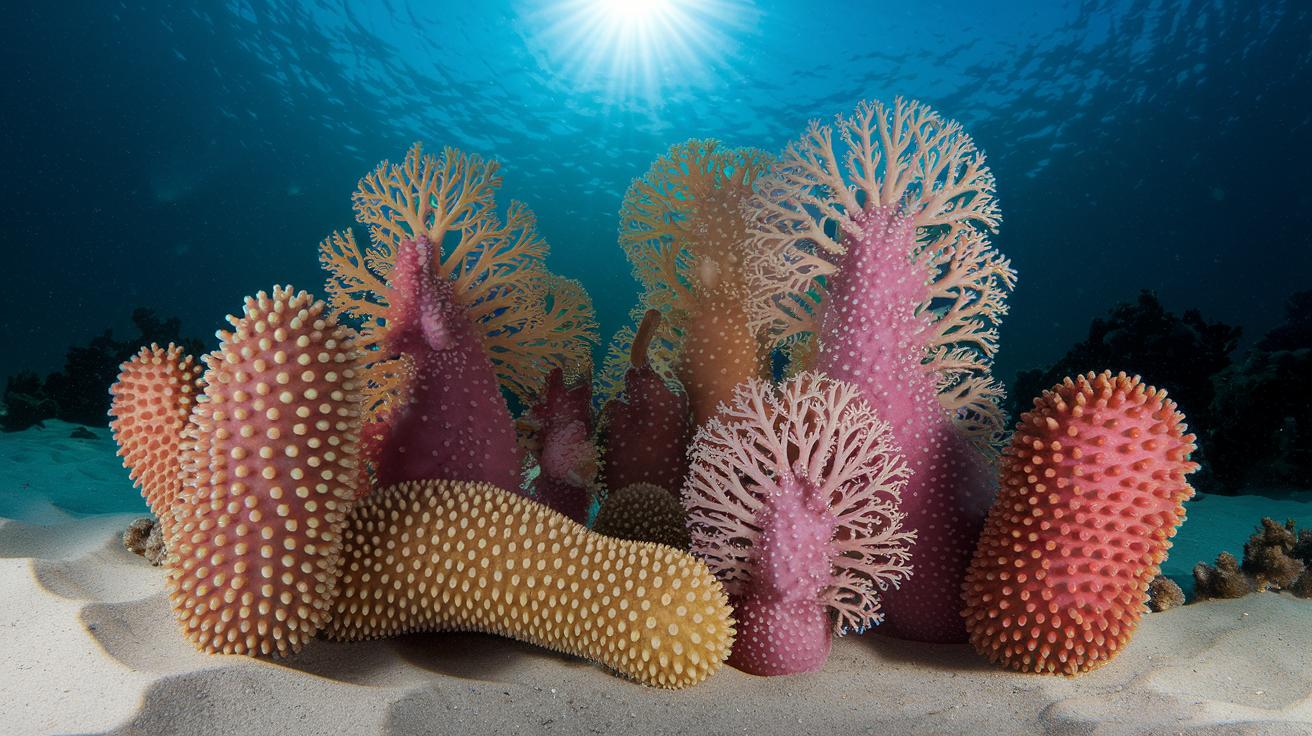
Sea cucumbers are part of the echinoderm family, much like starfish and sea urchins that show off a neat five-point symmetry. Knowing where they fit in the ocean world not only tells us about their place in nature but also highlights the many different ways they can look. You’ll find them in various sizes, colors, and even skin textures, each shaped by the unique homes they live in. For instance, groups like Holothuria, Stichopus, and Synapta prove that nature loves variety, similar to how you might enjoy different flavors in your favorite ice cream cone.
Below is a simple chart that breaks down the main taxonomic ranks with examples for sea cucumbers. A note like “Phylum: Echinodermata” helps guide our journey into the organized and wondrous world of these ocean dwellers.
| Taxonomic Rank | Example Genus/Species | Notes |
|---|---|---|
| Phylum | Echinodermata | Shares a five-point symmetry |
| Class | Holothuroidea | Soft-bodied sea cucumbers |
| Order | Holothuriida | Houses many common species |
| Genus | Holothuria | Shows a range of forms |
| Example Species | Holothuria edulis | Lives in warm, shallow waters |
Sea Cucumber Anatomy and Physiological Adaptations
Sea cucumbers are pretty cool creatures with lots of unique features that make them stand out in the ocean. Their water vascular system isn’t just an internal pump, it powers tiny tube feet that work like little suction cups, letting them move around smoothly and stick to surfaces. Imagine each tube foot gripping the sandy bottom like nature’s own Velcro, so they never slip.
At the very front, soft, feathery oral tentacles reach out gracefully. These serve as delicate filters, catching plankton and tiny bits of food much like a strainer scoops up particles in water. It’s a simple and gentle way to feed, perfectly matching their slow and steady lifestyle.
Perhaps the most fascinating trait is the cloaca’s dual role. It not only helps them clear out waste but also acts like a little respiratory tree, drawing oxygen right from the seawater. And in some species, there are special Cuvierian tubules that can be ejected when danger is close, kicking out a quick, emergency defense, almost like a built-in shield when they really need it.
Sea Cucumber Ecology: Feeding Behavior and Defense Mechanisms

Sea cucumbers are nature’s quiet cleaners, working behind the scenes to keep the underwater world balanced. Some of these gentle creatures eat by swallowing sediment, a process known as deposit feeding. In plain terms, they pick up tiny bits of organic material hidden in the sand, which fuels their bodies and stirs up the seafloor at the same time. Other sea cucumber species stretch out delicate, feathery tentacles to catch plankton floating by, a method called suspension feeding. Both ways not only give them the nutrients they need but also help cycle materials that keep our reefs thriving.
Their relaxed, slow movement along the seafloor is another cool aspect of their behavior. As they burrow, they naturally aerate the sediment, allowing fresh oxygen and nutrients to reach other marine life. It’s like they’re spreading little treasures of energy and minerals throughout their underwater neighborhood, making them truly indispensable to their ecosystem.
When danger comes knocking, sea cucumbers don’t just sit back. They have a host of clever defense tricks to protect themselves from larger predators. For instance, some can shoot out special Cuvierian tubules that work like a sticky net to ensnare attackers, while others might even break off a part of their body to make a quick getaway. Their thick skin, complete with tiny embedded ossicles, adds an extra layer of defense, and they sometimes release natural chemicals called saponins that are toxic to many potential threats. They may also inflate themselves to create a bigger, more intimidating presence.
- They can expel Cuvierian tubules that tangle up predators.
- They release sticky secretions which help immobilize any threat.
- They might detach part of their body, a defense known as autotomy, to escape quickly.
- Their thick skin, reinforced with tiny ossicles, serves as extra protection.
- They use chemical defenses like saponins that deter fish and small invertebrates.
- They can inflate their bodies to appear larger and scare off dangers.
Sea Cucumber Conservation Challenges and Environmental Threats
Recent research from 2025 and insights shared in a 2023 marine biology book show that sea cucumber numbers are dropping around the world. These gentle creatures help keep our seafloor healthy, but overfishing, especially driven by high demand in Asia, is really taking its toll.
Coastal development is another big worry. Places that once offered plenty of food and shelter for sea cucumbers are being transformed for urban use, leaving them with fewer safe spots to live. And changes in our oceans, like rising water temperatures and lower oxygen levels, make it even tougher for these animals to survive, since such shifts can upset how they breathe and where they can thrive.
There is a silver lining, though. Communities and governments are beginning to put plans in place to protect these important animals. Marine protected areas act as safe havens where sea cucumber numbers can bounce back, and local groups, like those in the Philippines, are taking a hands-on role in caring for their underwater neighbors. In one coastal village, a community’s targeted conservation plan led to a notable recovery in sea cucumber numbers, proving that dedicated local action can restore balance to marine habitats.
Sea Cucumber Culinary and Commercial Applications

Sea cucumbers have been a beloved ingredient in many East Asian kitchens for ages. Known for their soft, unique texture and gentle flavor, they add a special touch to a variety of dishes. In China, Korea, and Japan, they often swim into warming soups or hearty stews, soaking up flavors just like a sponge in calm water. Slow-cooked until tender, they transform dishes into something rich and comforting. Ever notice how a slow-cooked dish can feel like a gentle, warm hug on a cool day?
Traditional and Gourmet Sea Cucumber Dishes
In more upscale kitchens, chefs cherish sea cucumbers not just for their taste but also for the good nutrients they bring. Loaded with protein and collagen yet low in fat, they’re like a hidden treasure for body and joint care. Some recipes call for a slow simmer with Chinese herbs, while others use a light poach to keep the texture soft and velvety. Chefs often rehydrate dried sea cucumbers slowly, almost like reviving little treasures from the sea before they join the dish.
Market Guide and Pricing Trends
On the business side, the market price of sea cucumbers can change based on their grade and where they come from. Fresh ones usually fetch a higher price because of their size and clear texture, while dried ones are popular after a careful rehydration process. Trade experts look at appearance, firmness, and nutritional value to decide quality, paying close attention to even shape and a clean scent when rehydrated. Recently, some studies have even shown that parts of the sea cucumber might be useful in medicine, adding an extra splash of value to these fascinating sea creatures.
Sea Cucumber Aquaculture and Sustainable Harvesting Practices
Today, experts carefully breed sea cucumbers in specialized hatcheries and guide the young ones into controlled tanks or ponds. It’s almost like planting little garden seedlings in the gentle, soft soil of the ocean. Each tiny sea cucumber finds its perfect spot to settle and grow, much like a plant rooting itself in rich, nourishing earth.
In some places, especially in the Philippines, local communities join together to protect these marine gems. They safeguard the breeding fish and follow simple rules like size limits and seasonal breaks to stop overfishing. This hands-on method mixes time-tested local knowledge with modern ideas, ensuring that these creatures and their watery homes stay healthy.
Research from around the world shows that setting careful catch limits and using the right tools are key. Not only does this careful planning help sea cucumbers thrive, it also supports local livelihoods. It’s a simple, yet powerful reminder that when we take care of nature, we help our communities flourish too.
Final Words
In the action, we waded through the fascinating world of sea cucumber biology, habitat, and species diversity. We looked at their unique body structure, feeding habits, defense techniques, and the care needed to keep marine environments healthy.
This review taps into our shared love for all things aquatic. With every detail unfolding like ripples on water, there's plenty of reason to smile and stay excited about preserving these remarkable creatures.
FAQ
How do you buy sea cucumbers and what is their price?
The answer is that buying sea cucumbers usually means visiting specialty seafood markets or aquaculture suppliers, with prices varying by freshness, size, and regional demand.
What benefits do sea cucumbers provide?
The answer is that sea cucumbers help clean the seafloor by recycling nutrients and naturally supporting marine life, while also offering health benefits when used in culinary dishes.
Are sea cucumbers poisonous?
The answer is that sea cucumbers are not poisonous when prepared correctly, though some species might release mild toxins as a defense, so proper handling is key.
Can you eat sea cucumbers?
The answer is that sea cucumbers are edible and are a prized ingredient in East Asian cooking, commonly served in soups and stews after careful rehydration and cooking.
How do sea cucumbers differ from fish and what species exist?
The answer is that sea cucumbers are invertebrates, not fish, belonging to the echinoderm group, with common species found in genera like Holothuria, Stichopus, and Synapta.
In Stardew, what is the role of sea cucumbers?
The answer is that in Stardew Valley-related topics, sea cucumbers often appear in fan mods or online discussions as a unique, decorative or culinary reference, even though they aren’t in the original game.
Why is the price of sea cucumbers so high?
The answer is that sea cucumbers are expensive due to limited wild stocks, high demand in gourmet dishes, and their valuable compounds used in health supplements and research.
Why do sea cucumbers squirt white stuff?
The answer is that sea cucumbers expel white, sticky material as a defense tactic, which helps deter predators and gives them a chance to escape danger.
Is it safe to touch a sea cucumber?
The answer is that touching a sea cucumber is generally safe; however, always wash your hands afterward since their skin can carry bacteria from their marine surroundings.