

Ever notice how sometimes your fish don’t get their meal? Sinking pellets fall into the tank like a soft drizzle, making sure every fin gets a bite. They help cut down on wasted food and keep your aquarium looking as clear as a calm pond. Today, let's dive into how these pellets make feeding time easier and support a healthier tank. Stick with me as we explore the rewards of using sinking pellets for a balanced, happy aquatic home.
Benefits of Sinking Fish Food Pellets for Aquariums
Sinking pellets bring food right to where your fish need it most while cutting down on wasted feed. They drop gently to the bottom of your tank, making sure bottom-dwelling fish get their share of nutrition. I once read a forum post where someone mentioned that regular Hikari pellets floated up to the tank overflow, leaving plenty of uneaten food behind. That small story reminds us how sinking pellets help keep your tank clean by reducing leftovers that can harm water quality.
Different fish like to eat in different ways, so it’s important to choose the right kind of pellet. For example, anthias live low in the tank and do best with food that sinks quickly so they can grab every bite. On the other hand, clownfish often feed at the surface. Think of it like this: while clownfish can easily pick up food from the top, anthias really depend on food sinking down fast to reach them. Matching the pellet style to your fish’s habits means everyone gets a fair chance to enjoy their meal.
When food sinks properly, it does more than just feed your fish, it also helps keep your aquarium’s ecosystem balanced. With less food floating around, there’s less chance for extra organic matter to build up and spoil the water. By using sinking pellets, you promote a cleaner, healthier environment for all your aquatic buddies, letting your tank thrive as beautifully as a calm underwater current.
Choosing the Right Sinking Fish Food Pellets by Species

When you set out to pick the best pellets for your fish, it all starts with matching the food’s traits to what your fish really needs. For example, small, hard pellets like Spectrum or Ocean Nutrition #1 and #2 are great because they sink fast, they’re ideal for bottom feeders such as anthias that love to dine at the lower levels. And even though clownfish tend to feed near the top, mixing things up with a premium deep-delivery bite can add variety and boost their meal’s benefits.
When you choose pellets with the right size, weight, and density, you not only satisfy your fish’s dietary needs but also make life easier with auto feeders. These feeders distribute food smoothly every time, so you can relax knowing your underwater friends are getting a steady, hassle-free meal.
It helps to keep a few important points in mind. Look at the pellets’ nutrient mix, how heavy they are, and how quickly they sink. For instance, Omega One pellets might need a short soak to sink properly, ensuring that even the most active bottom feeders aren’t left out. The quality of the ingredients and the pellets’ hardness also count, they affect how long the food lasts and its overall nutrition. And when your feed works well with your auto feeder, you’ve got a reliable setup that keeps things simple.
You might want to look at these details:
| Attribute | What to Consider |
|---|---|
| Pellet Size | Fits the fish’s mouth shape |
| Density & Sink Rate | How quickly the pellet sinks (fast or slow) |
| Nutrient Profile | Balance of protein, fat, and additives |
| Hardness/Ingredient Quality | Affects longevity and nutrition |
| Auto-feeder Compatibility | Works well with your feeder system |
| Price/Value Comparison | Good quality without breaking the bank |
Integrating Sinking Fish Food Pellets with Auto Feeders
Auto feeders can sometimes be a bit picky when the pellets are made a little differently. Even tiny changes in the ingredients, like different binders or fats, can change how fast a pellet sinks. Water factors like saltiness or temperature also play a big role. For example, a small tweak in the pellet recipe might mean the difference between a smooth drop or a little float around. This is really important for fish that live at the bottom because they rely on those pellets reaching them right on time.
To help your feeder work smoothly, try soaking some pellets before you feed them. This can help them sink quicker. Then, adjust the feeder’s timing and even the water flow in your tank to fit your setup. I remember tweaking my feeder settings one day, and it was amazing to see the pellets fall exactly where my anthias were waiting.
| Brand | Key Note | Sink Performance |
|---|---|---|
| Spectrum | Reliable for most tanks | Fast sink |
| Ocean Nutrition #1 | Effective for bottom feeders | Quick descent |
| Omega One | Improves with pre-soaking | Enhanced sink rate |
Comparing Sinking and Floating Fish Food Pellets
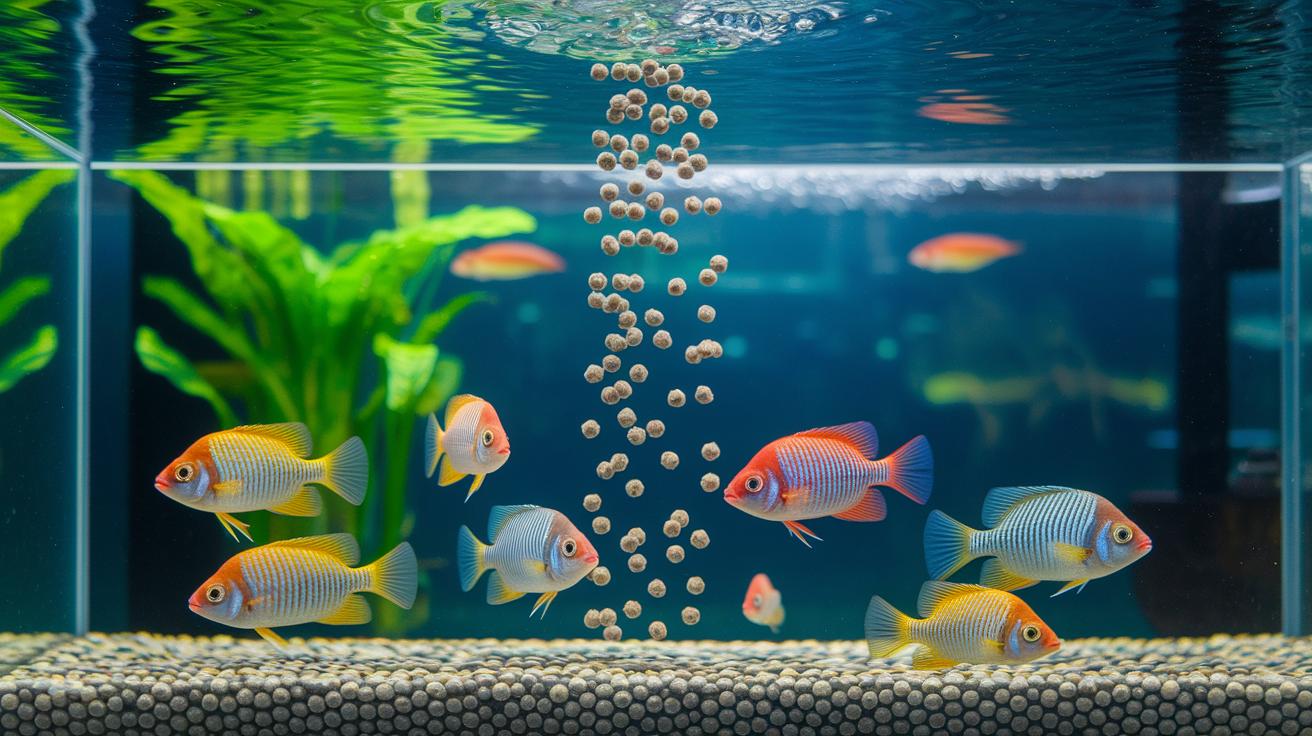
Floating pellets might seem like a great idea, but they often end up wasting food instead of feeding your fish. When the food stays at the surface, it can overflow before your fish get a chance to nibble, leaving a mess that can cloud up your water. Imagine watching those little pellets drift around while shy, bottom-loving fish are left hungry. Even though some fish like clownfish quickly grab the floating bits, many bottom feeders get overlooked and miss out.
On the other hand, sinking pellets offer a smart way to feed every fish in your tank. These pellets quickly sink down, making sure even the fish who like to keep to the bottom get a good share. By falling fast, they help cut down on waste and keep your water clean, just like how every ingredient in your favorite recipe finds its perfect spot. Picture the food gently descending into your tank, meeting each fish’s needs and keeping the water clear for endless aquatic fun.
User Feedback and Recommended Sinking Pellets
Many aquarists love Spectrum and Ocean Nutrition #2 because they sink steadily, like a smooth pebble dropping into a quiet brook. One hobbyist said, "Spectrum sinks so smoothly, it's like watching a pebble fall into clear water."
Some aquarists mentioned that a few choosy fish may need time to adjust to a sinking diet. They suggest switching their food gradually or pre-soaking brands like Omega One to help the transition. One hobbyist shared, "At first, my fish hesitated, but a little soak made all the difference."
Based on what the community is saying, these products are a hit because of their sinking performance. Their experiences show that reliable sinking pellets can make feeding time feel as smooth and refreshing as a gentle ripple in your aquarium.
Buying Guide: Where to Get Sinking Fish Food Pellets

If you're looking for sinking fish food pellets, start by visiting your local aquarium shops or checking out trusted online stores. These places often carry well-known brands like Spectrum, Ocean Nutrition, and Omega One. Shopping in person lets you see the pellets up close, chat with friendly experts, and get tips that feel as refreshing as a cool stream on a hot day.
Buying locally has its perks, and online stores offer great convenience too, with home delivery and sometimes a bigger selection to choose from. One fellow fish keeper once mentioned how finding a dependable falling carp diet at a local shop changed his tank’s feeding routine for the better. Ever notice how a small change can make your aquarium sparkle a bit more?
When you buy, take a moment to check out details like how fast the pellets sink, their size, and what they’re made of. Knowing these things is like measuring the gentle ripple of water, they help ensure the food fits your fish’s needs perfectly. And don’t forget to review return policies; it gives you that extra reassurance, just like a steady current in a well-maintained tank.
FAQs on Sinking Fish Food Pellets
-
Q: How quickly do sinking pellets settle in different water conditions?
A: In most tanks, you’ll see pellets touching the bottom within seconds. Denser pellets might take just a bit longer. Try testing in your own tank because water currents can change the way they fall. It’s a bit like watching a pebble drop in clear, still water versus a gentle stream. -
Q: Which pellet size is ideal for small-mouthed species like anthias?
A: Anthias do best with smaller, firm pellets that fit their tiny mouths perfectly. Imagine finding just the right piece of a puzzle, when the size is spot on, feeding becomes a smooth and satisfying routine. -
Q: How can auto feeder settings be fine-tuned for optimal pellet delivery?
A: You can start by adjusting the feeder’s timing and even pre-soaking the pellets to help them drop steadily. Keep an eye on a few trial runs to make sure the feeder matches your fish’s routine. It’s a bit like tuning a guitar until every note is just right. -
Q: How do water flow dynamics influence pellet sinking behavior?
A: The way water moves can really change how pellets settle. A calm, gentle flow can help them glide down, while stronger currents might slow them down or push them off course. Think of it like leaves drifting down, when the breeze is soft, they fall steadily, but a gust can mix things up. -
Q: What scientific factors guide the selection of sinking pellets?
A: You’ll want to consider the pellet’s density, nutrient blend, and firmness when picking the best option for your tank. Doing small tests can help you see which pellet works best with your water flow. It’s sort of like mixing ingredients for your favorite recipe, you need just the right balance to create something wonderful.
Final Words
In the action, the article explored how sinking fish food pellets work to feed bottom dwellers while preventing waste. It touched on matching pellet types to species needs, auto feeder tweaks, and even a side-by-side look at floating versus sinking options. User feedback and buying tips also made an appearance. Every insight helps make your tank as inviting as a calm reef. Enjoy the benefits of sinking fish food pellets and keep your aquatic world thriving and vibrant.
FAQ
How long does it typically take for sinking fish food pellets to sink?
The time needed for sinking fish food pellets to settle is usually a few seconds, depending on pellet density and water current, allowing bottom-dwelling fish to access their feed quickly.
Which species are best suited for sinking fish food pellets?
Sinking fish food pellets are best suited for bottom-feeders like goldfish and anthias, which rely on feed reaching the lower tank levels for proper nutrition and minimal surface waste.
How should auto feeders be set up for sinking fish food pellets?
Auto feeders should be adjusted with techniques like pre-soaking pellets and managing water flow so that the sinking pellets are delivered properly, ensuring the feed reaches all fish in the tank.
Do water conditions like flow and salinity affect how pellets sink?
Water conditions, including flow and salinity levels, influence pellet sinking behavior by altering pellet density and descent speed, which may require adjustments in setup to maintain proper feeding.
What factors should be considered when selecting sinking fish food pellets?
When choosing sinking pellets, consider pellet size, density, nutrient content, and price, ensuring a match with your fish’s mouth size and feeding habits for optimal nutritional delivery.